As part of the System Design module, we analyzed the chicken and fish mandi ecosystem in Ghaziabad and proposed context-sensitive solutions to improve its waste management system.
My Contribution – I was actively involved throughout most stages of the project, primarily focusing on creating research plans, conducting user interviews, performing secondary research, and analyzing insights.
Nov 2022 - Dec 2022
College Project
WUD
Category
System Design
Team
5 Designers
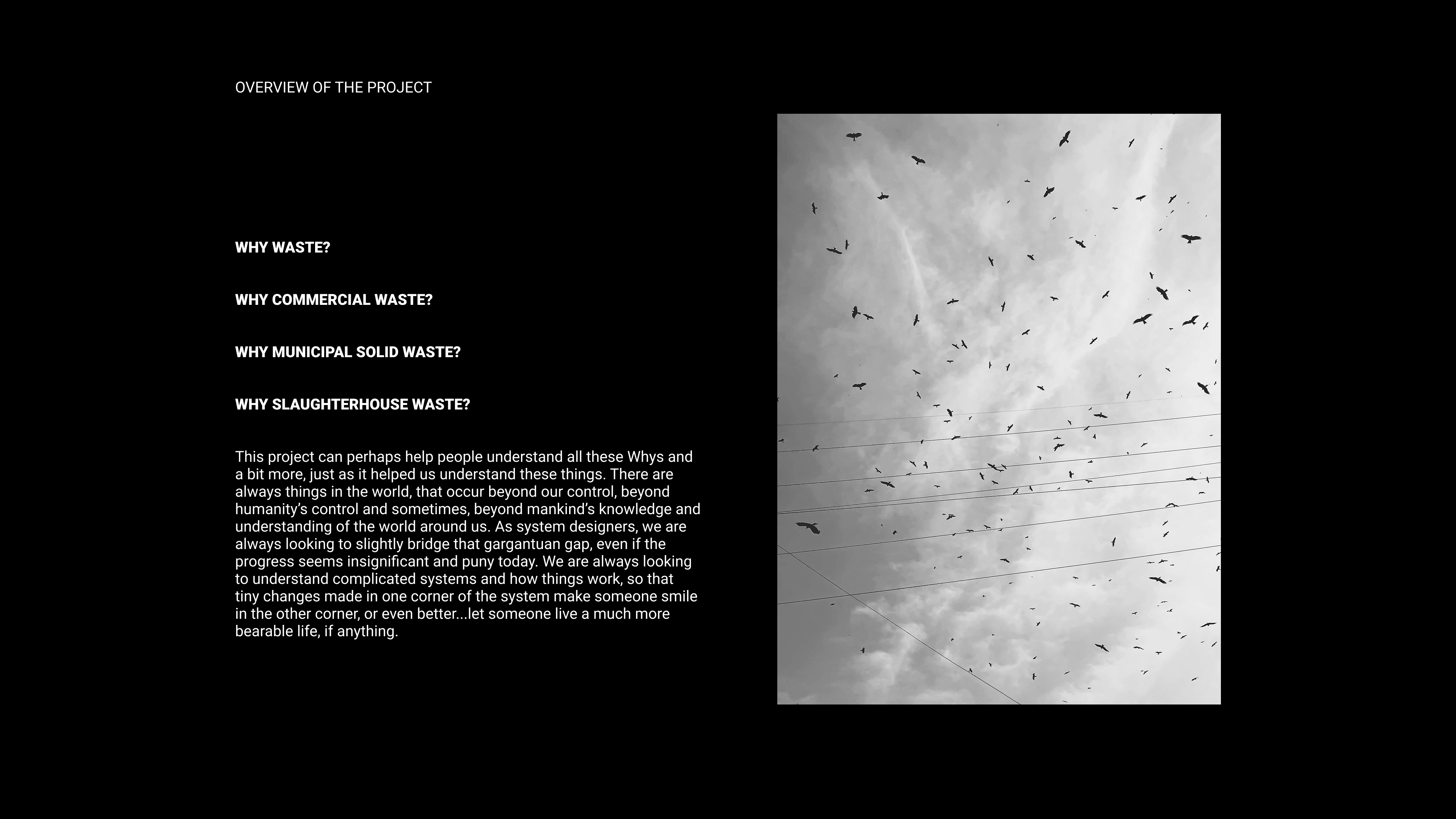
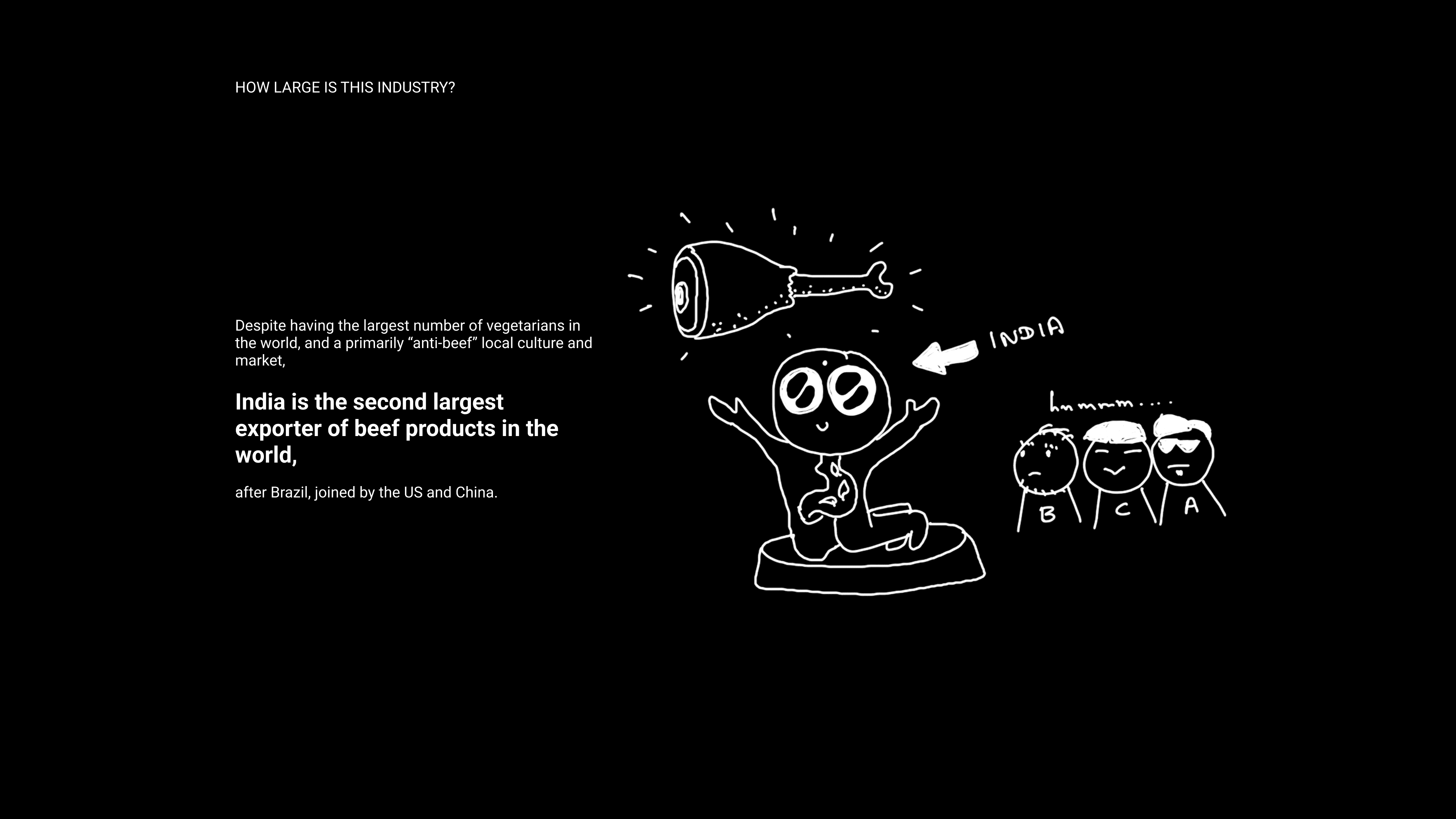
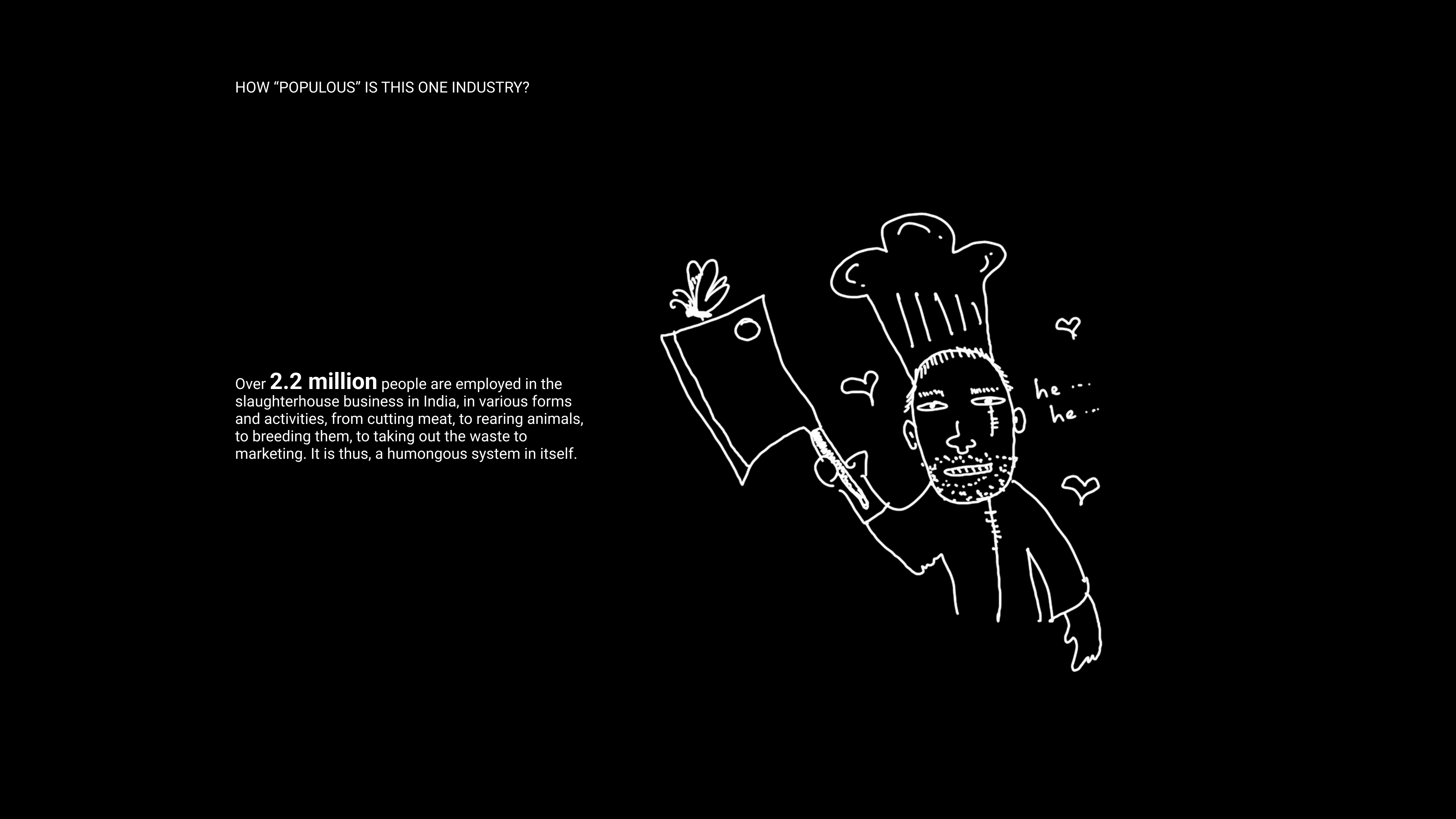
Ever wondered,
"How significant is the slaughterhouse system in India",
which is a predominantly vegetarian (40%) country?

(Warning: This following gallery contains some graphic images that might be disturbing to some viewers.)
What did we find out?
So, what did we see?
What did we hear?
What did we smell?
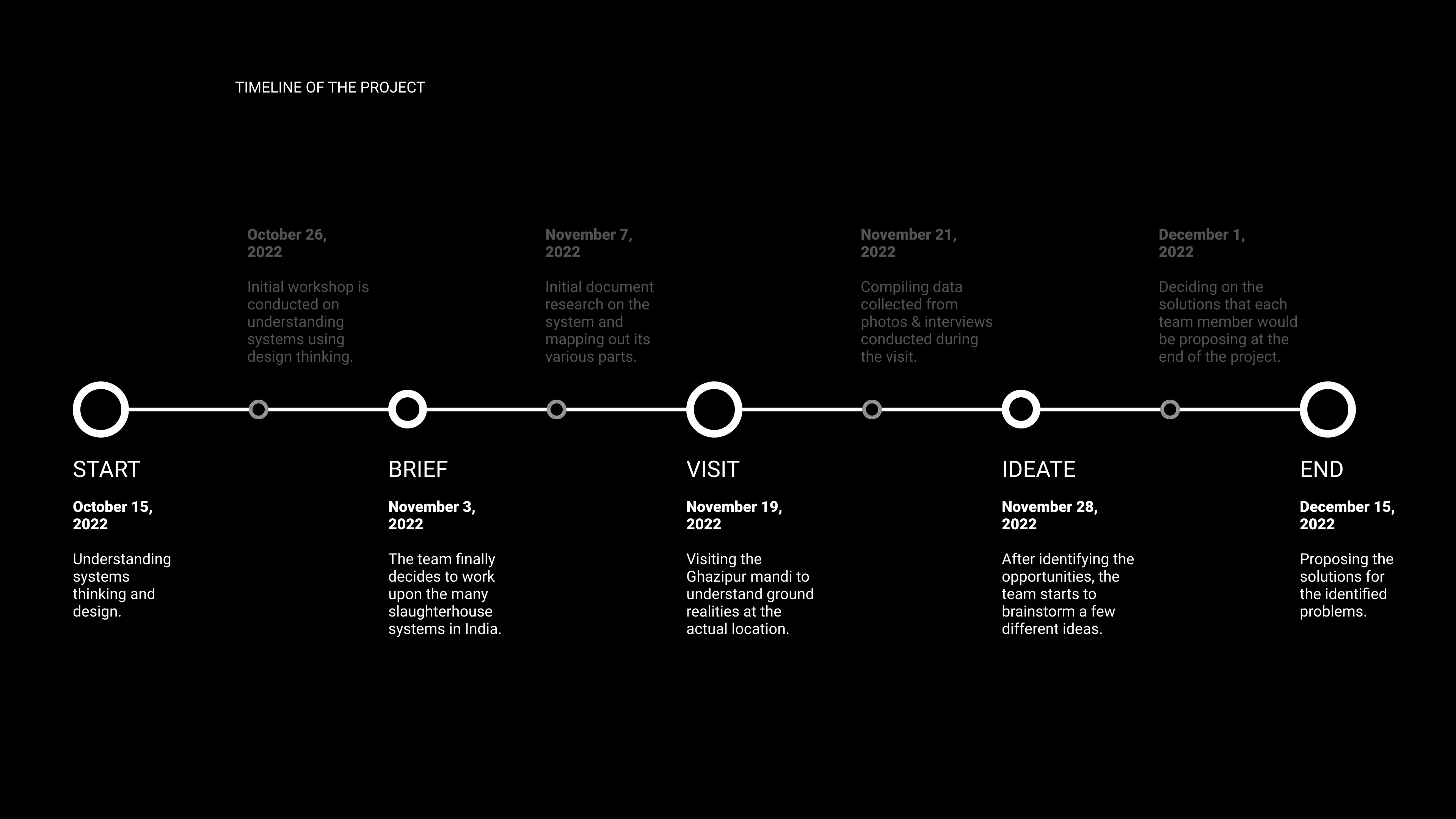
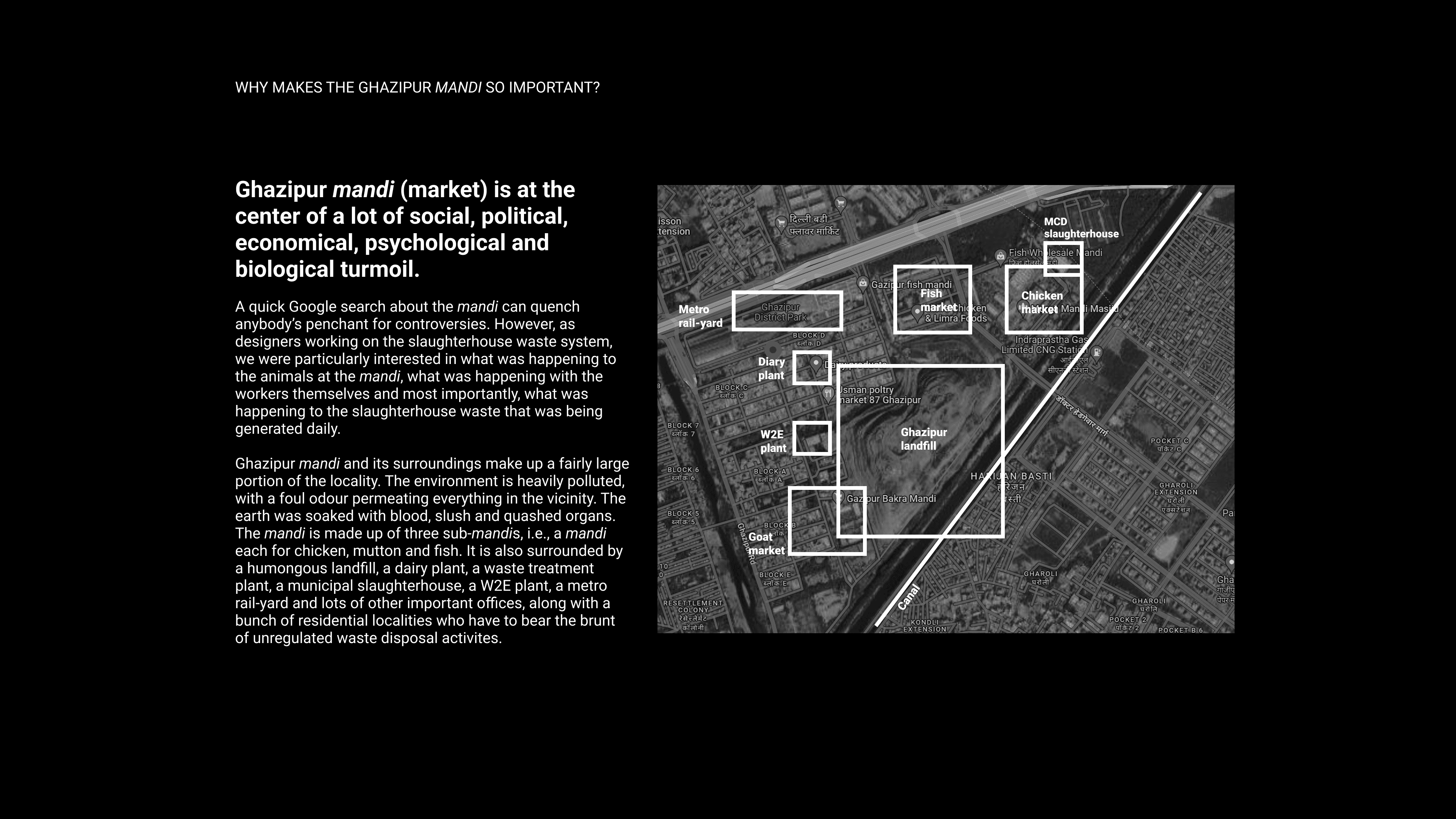
If you were wondering, we walked through the mandis, starting from chicken, fish and finally goat, with the goat mandi being farther away from the other two.
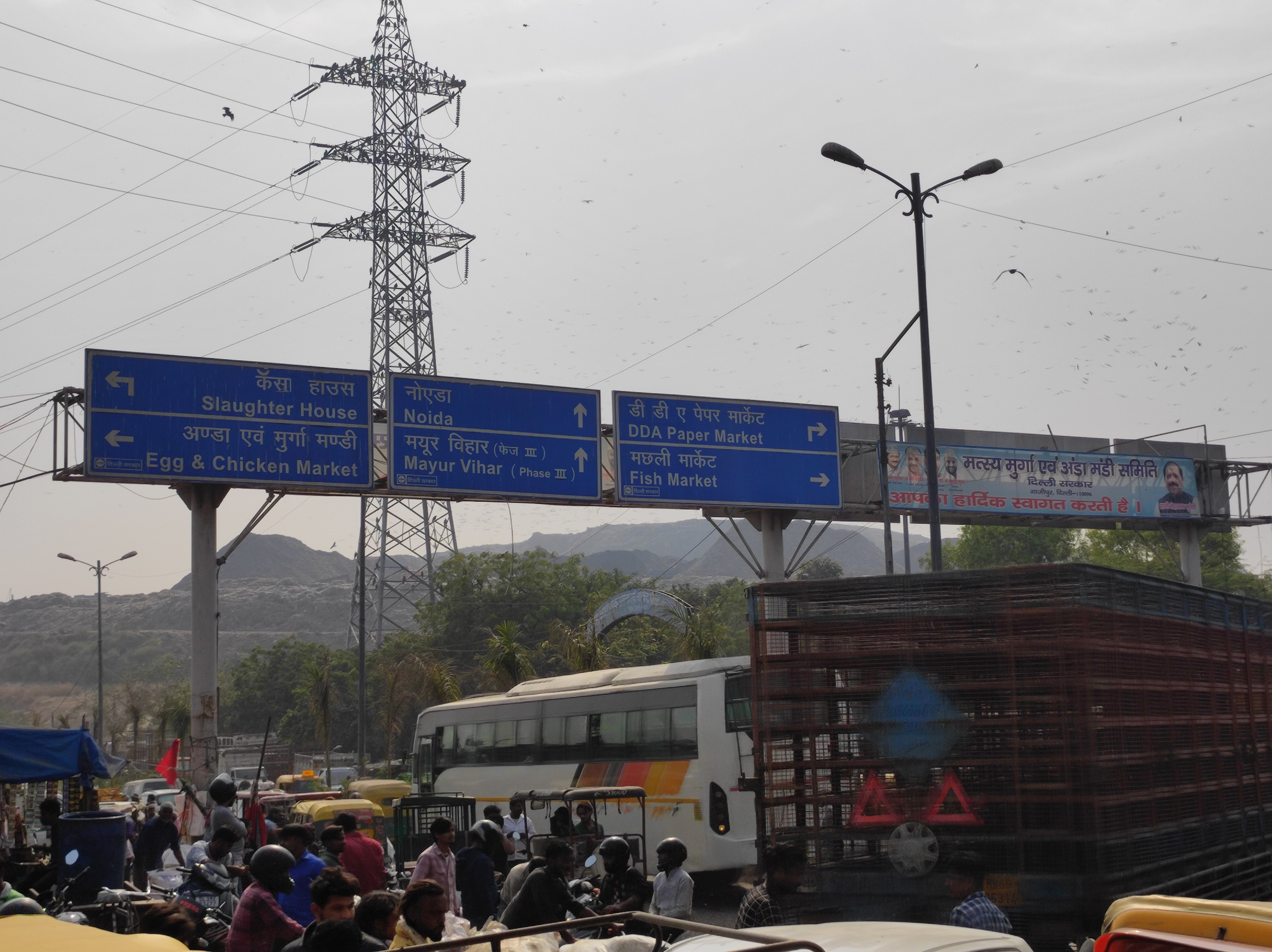
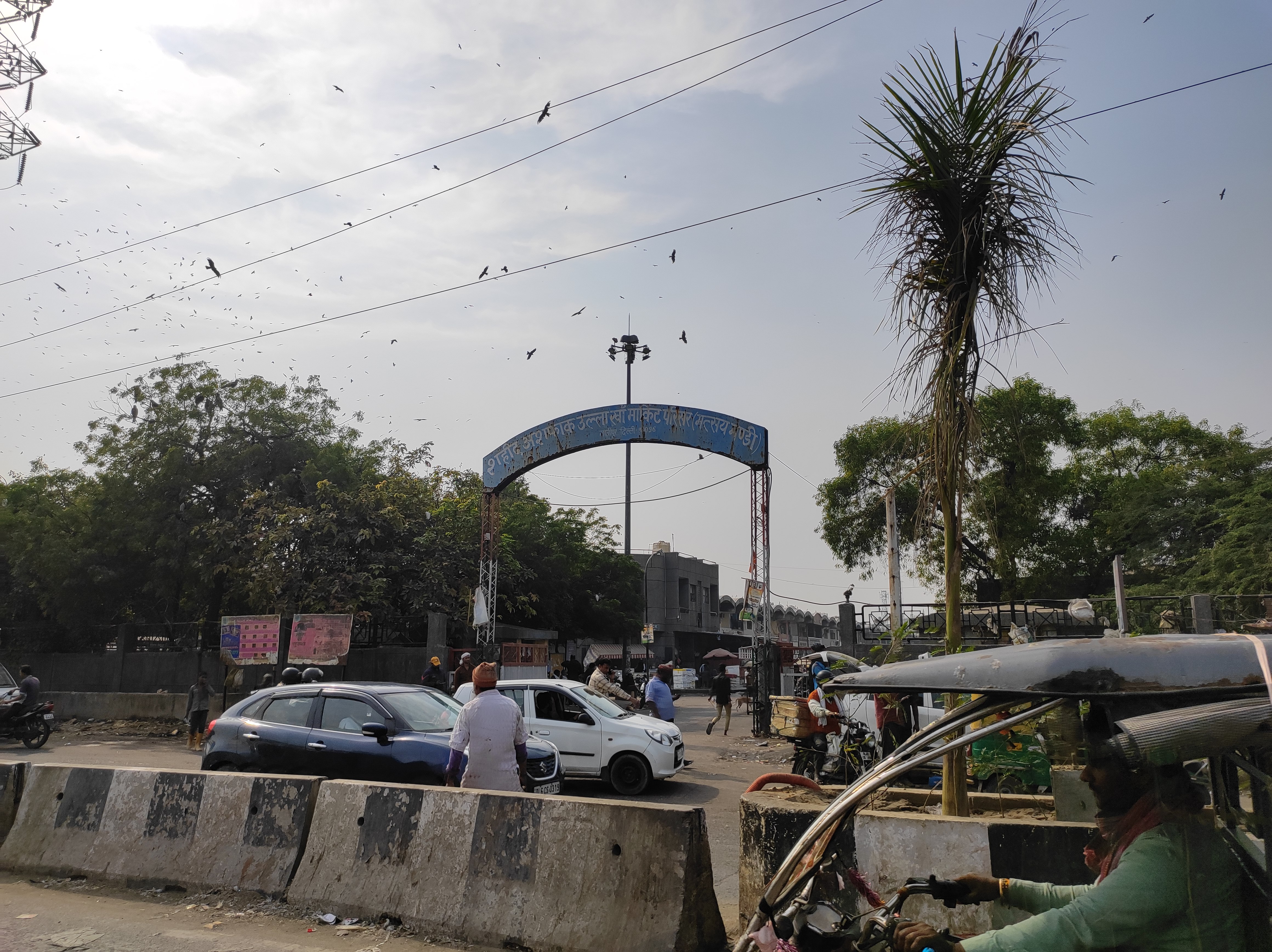
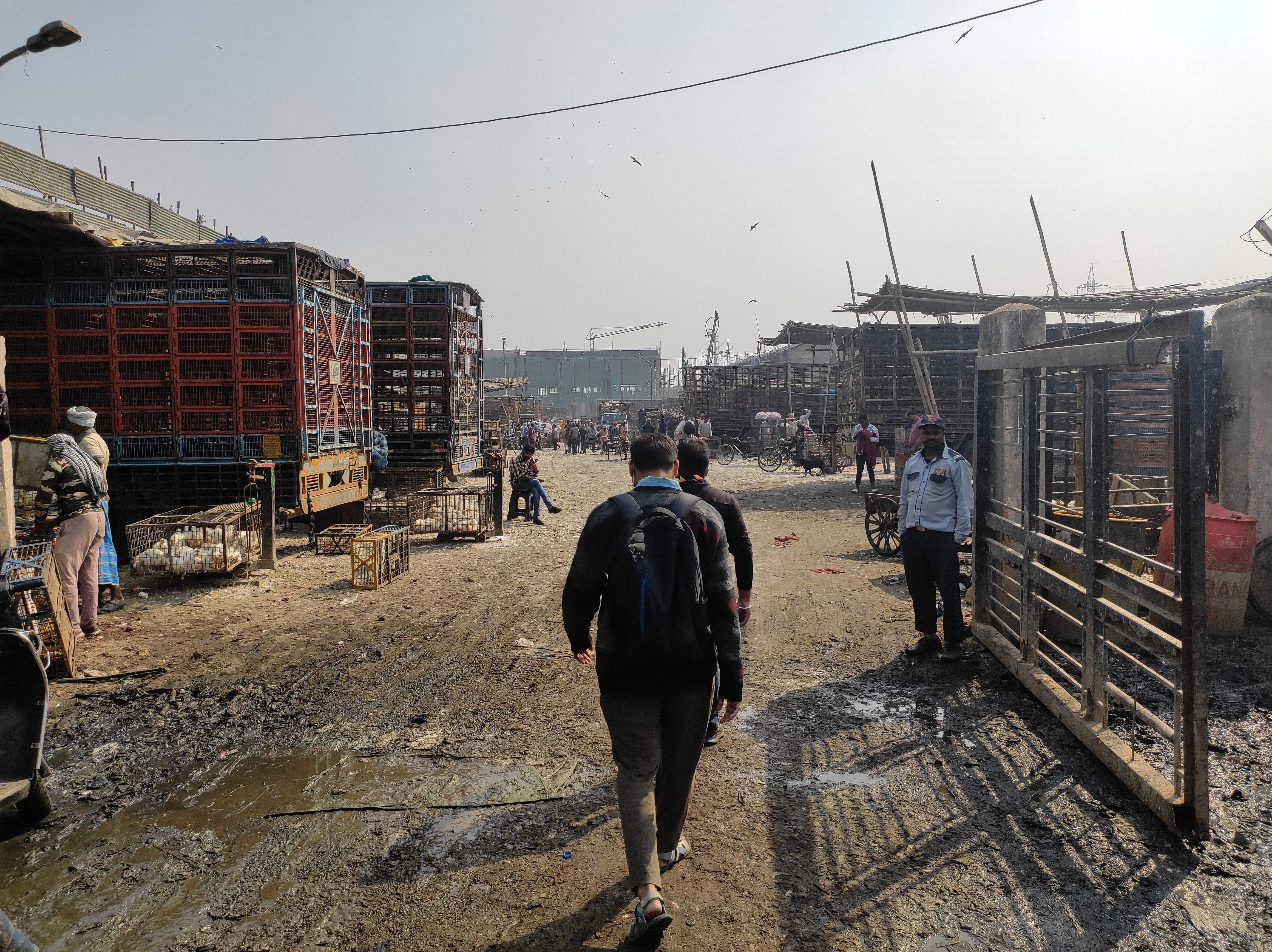
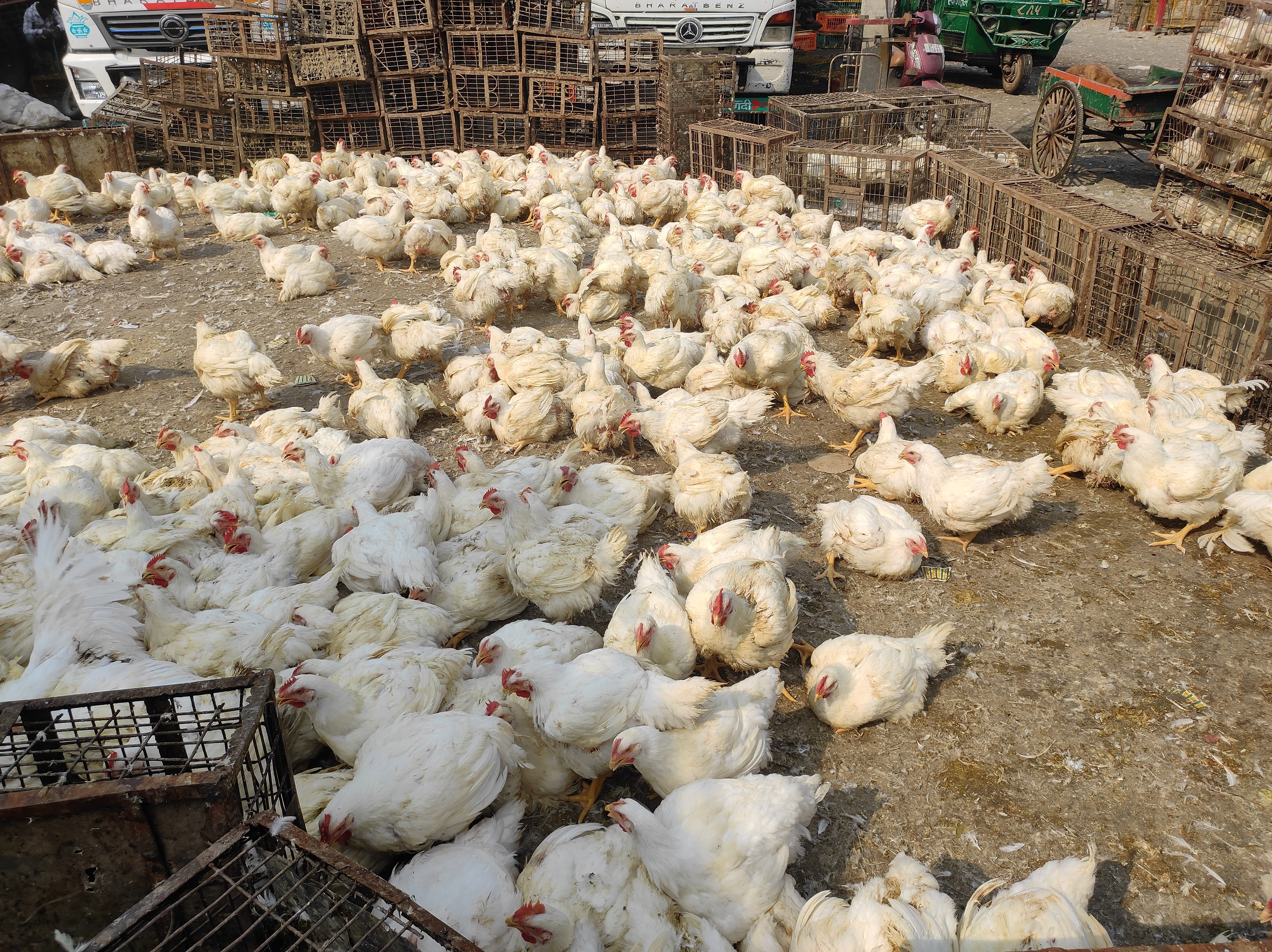
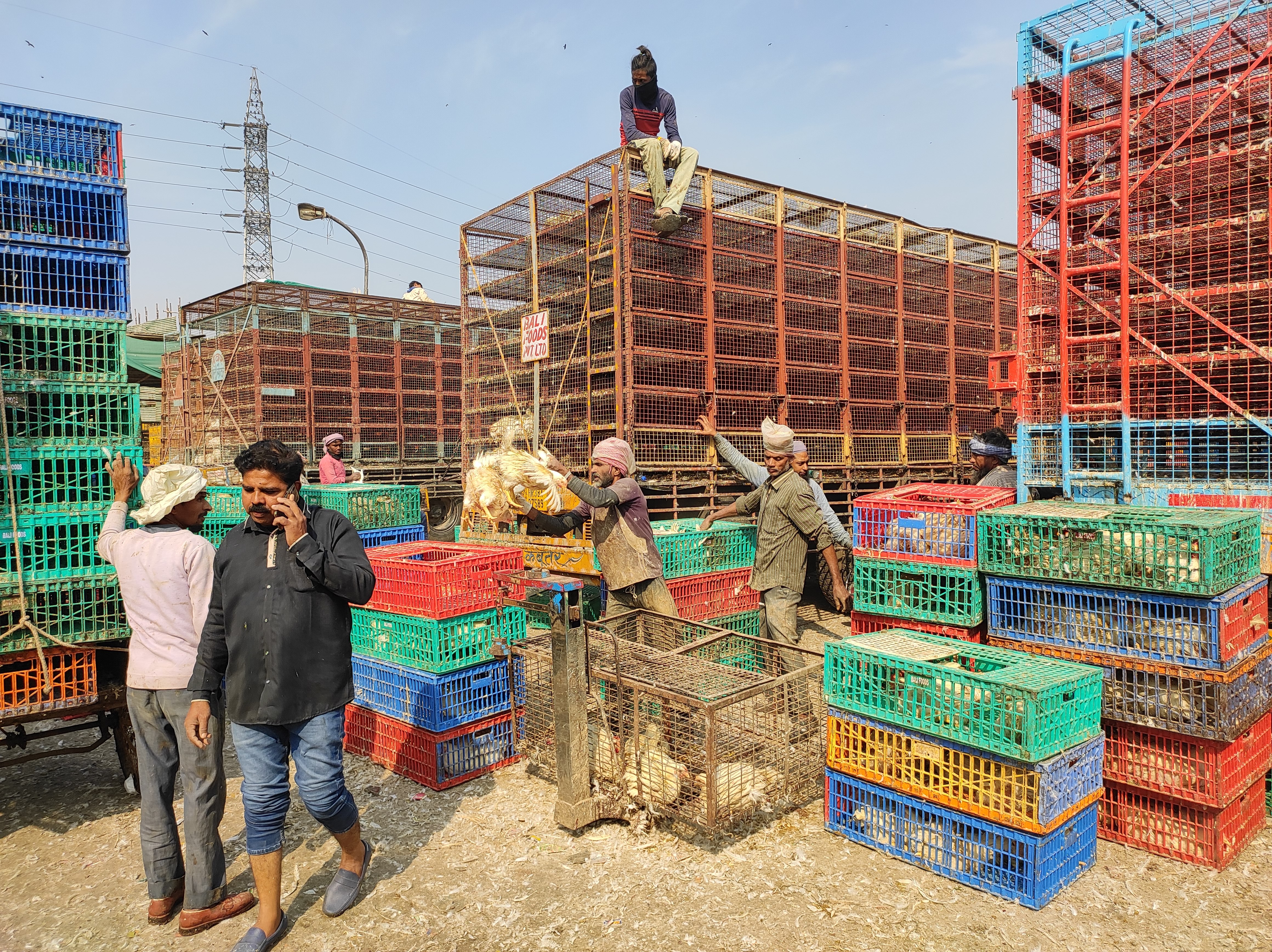
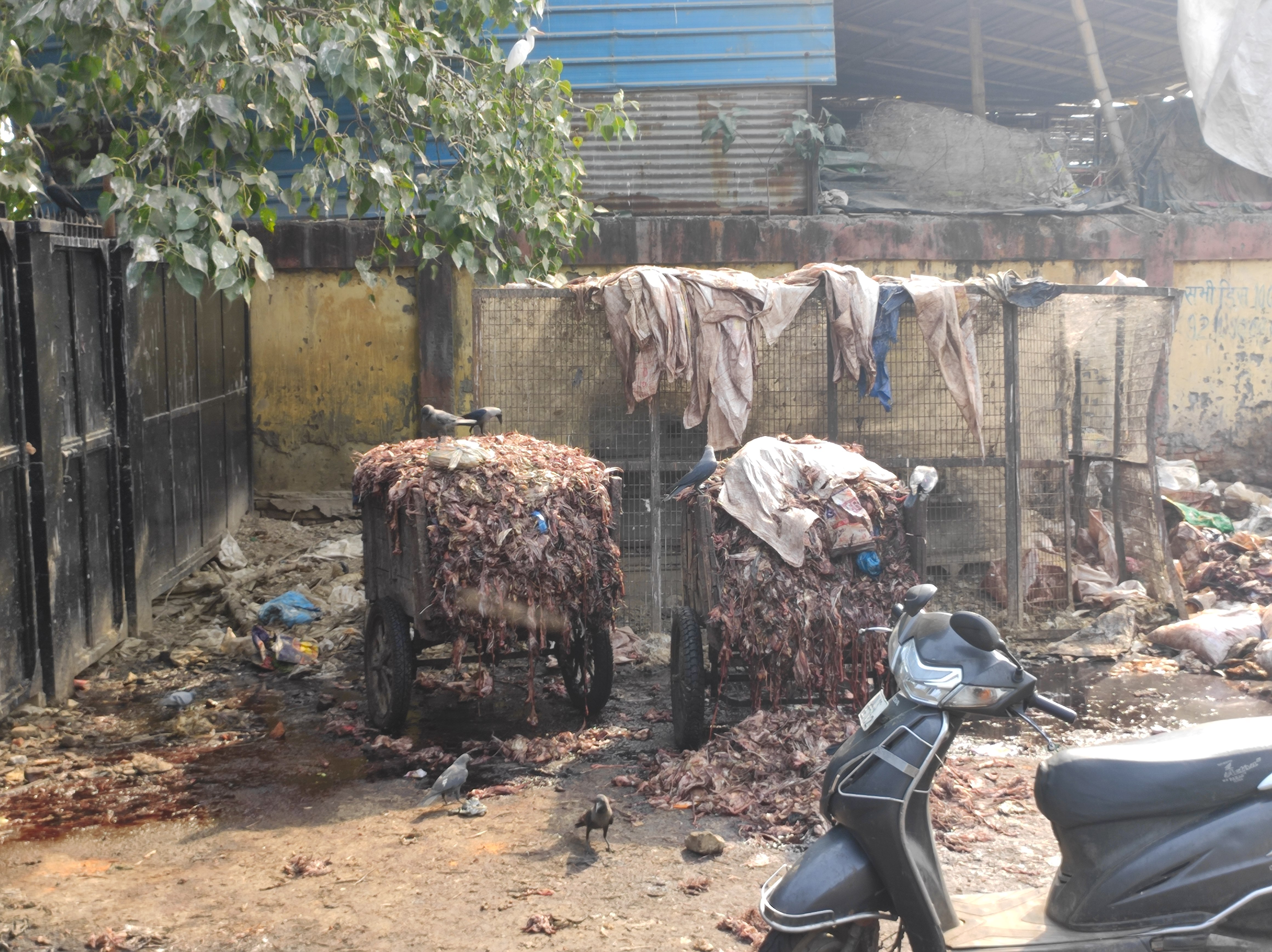
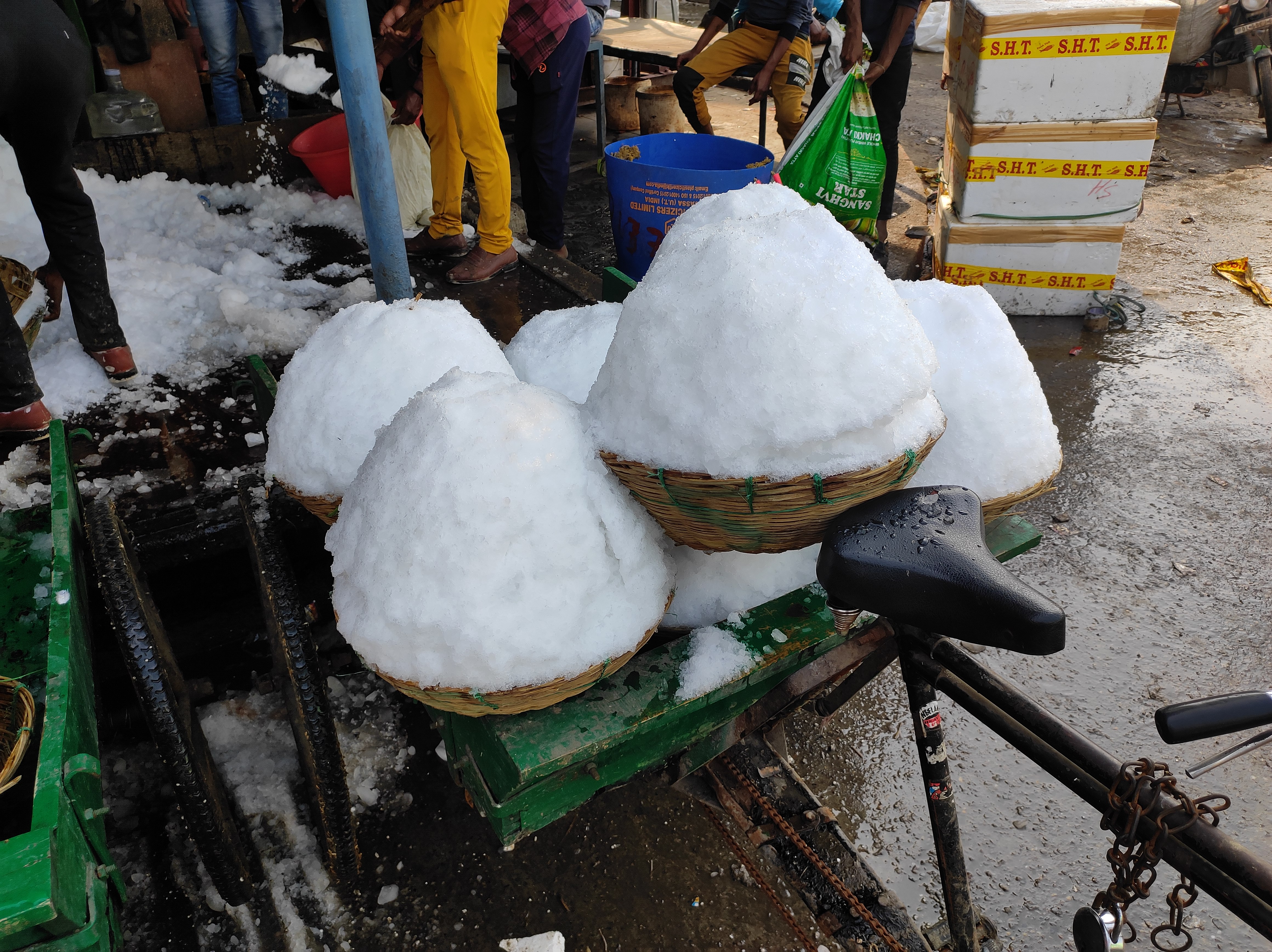
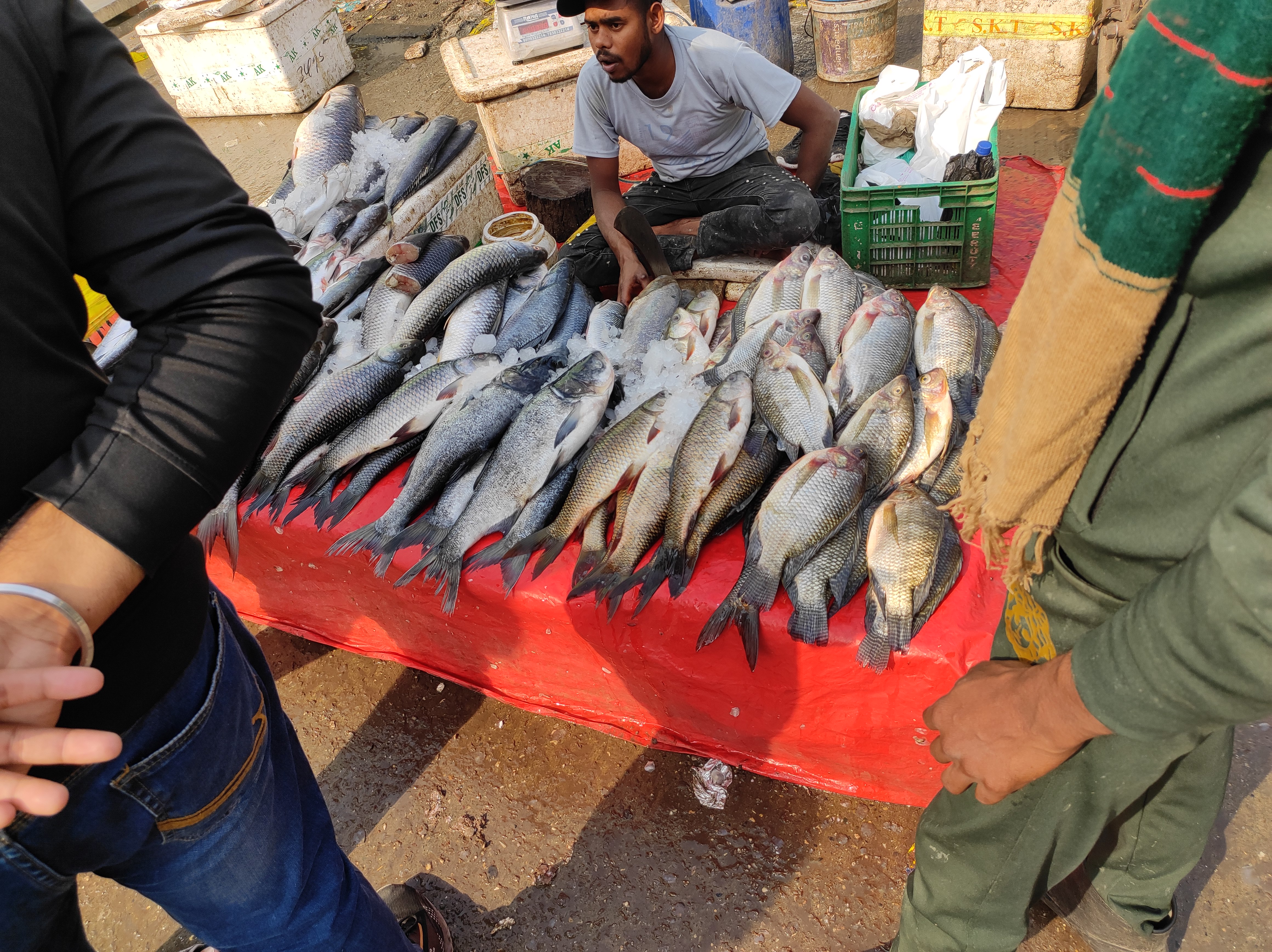
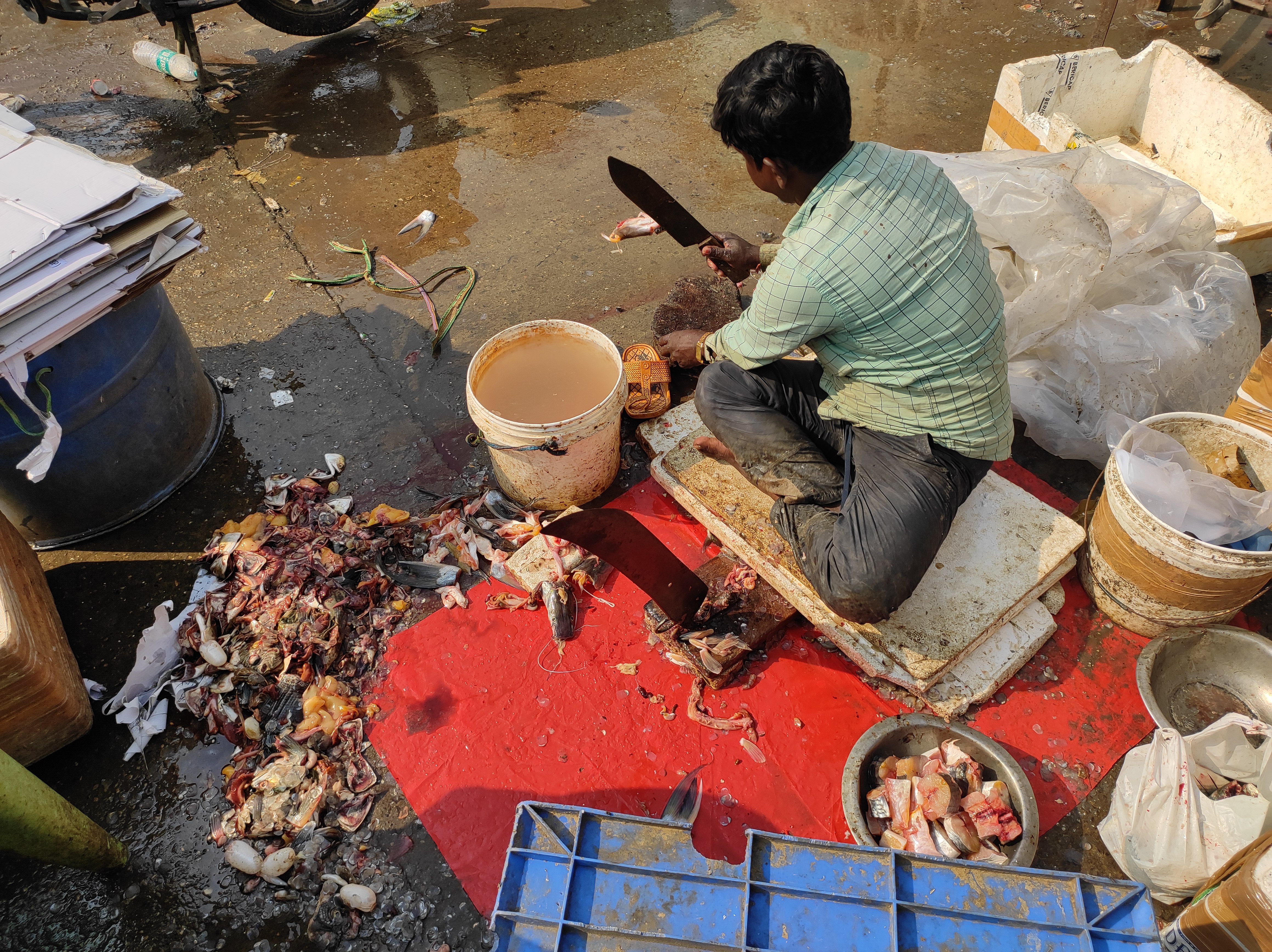
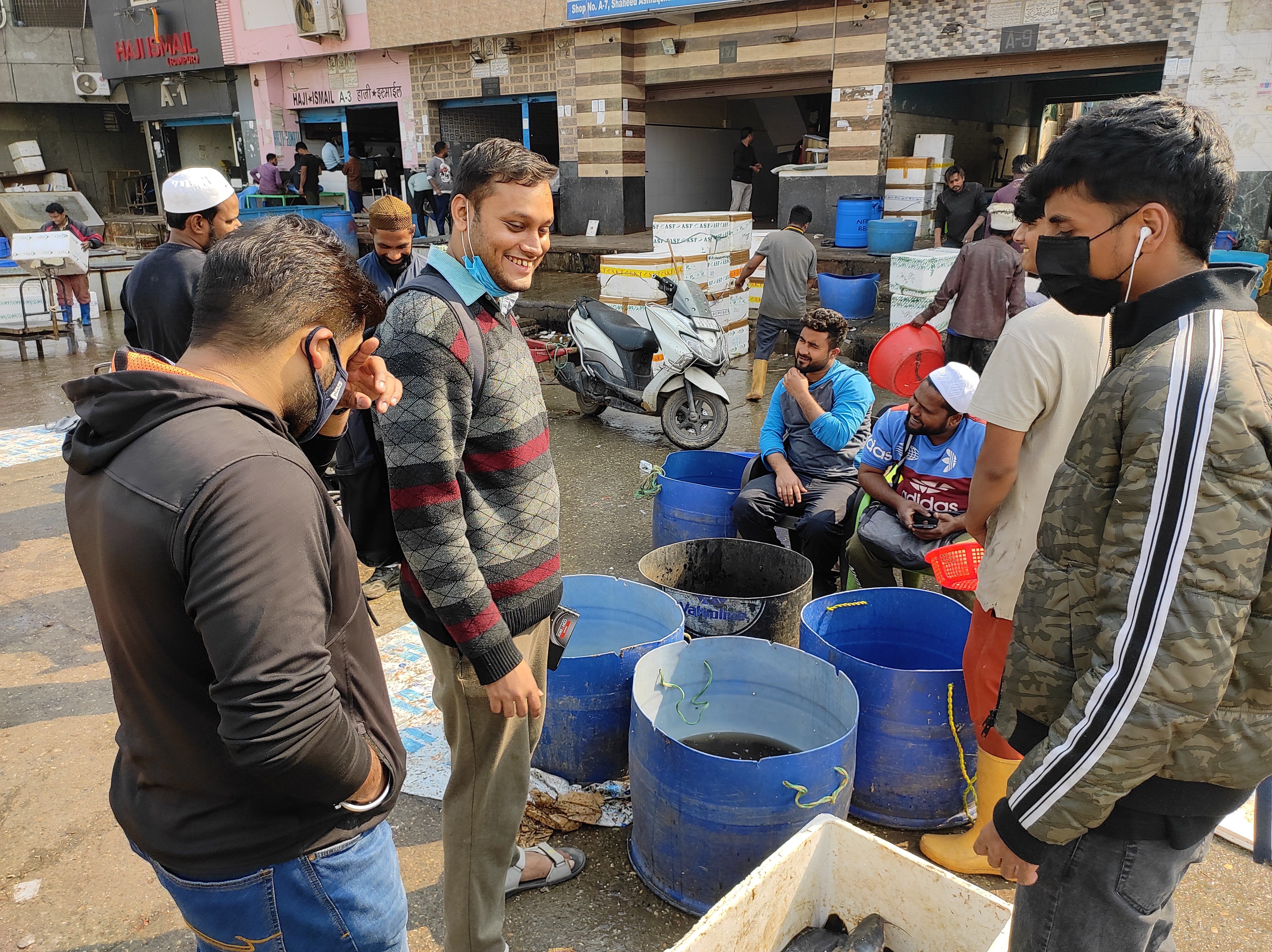
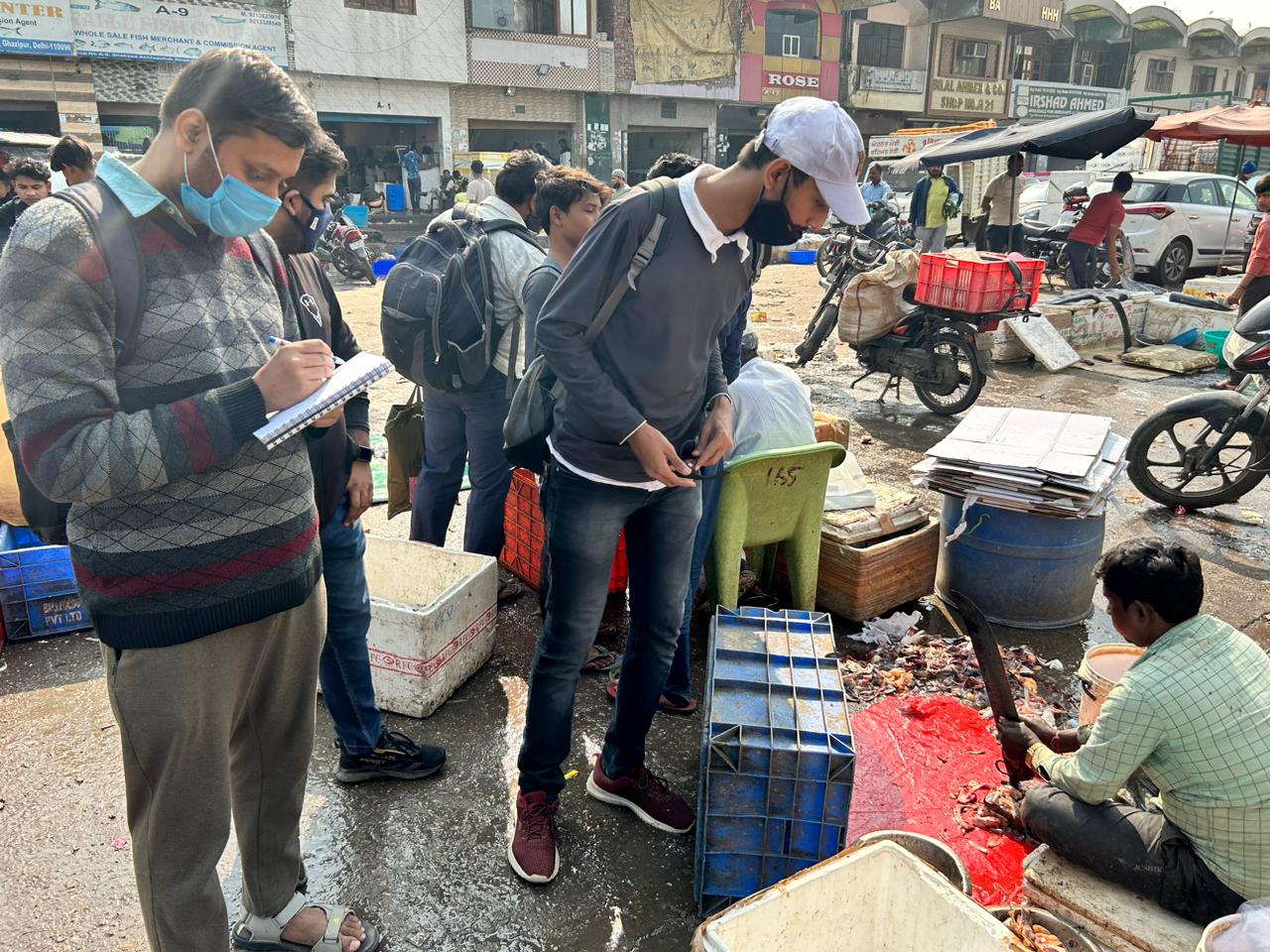
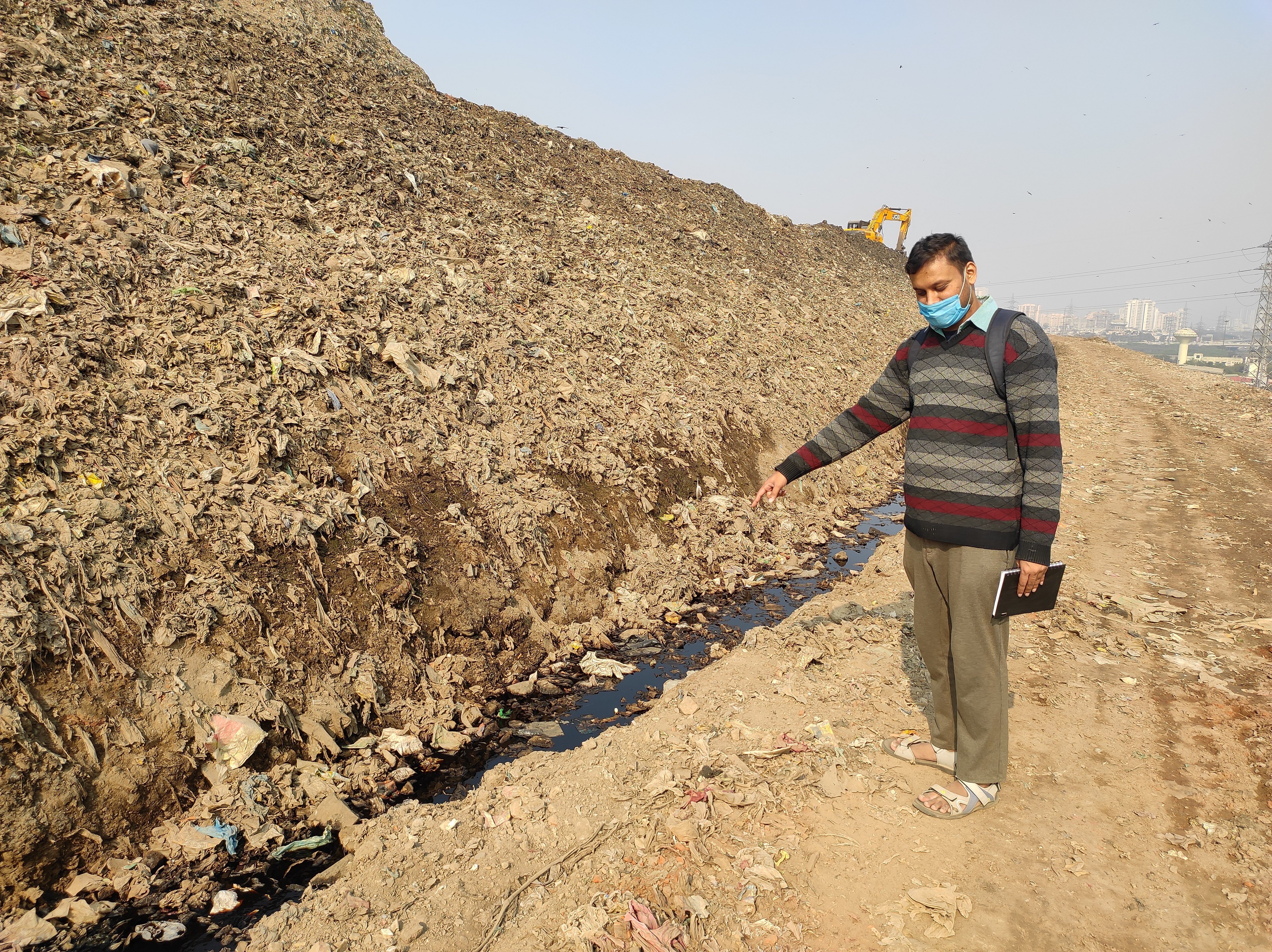
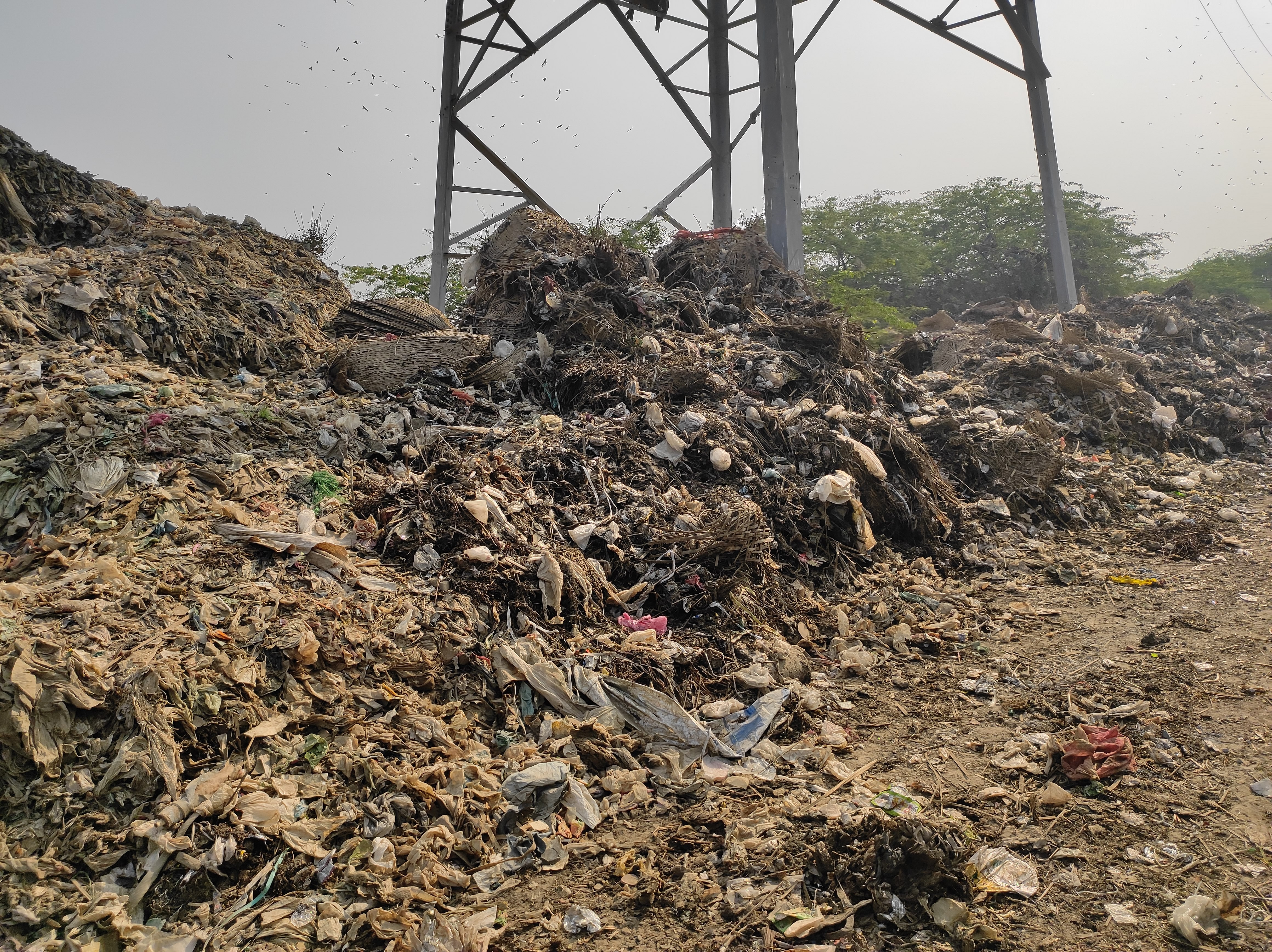
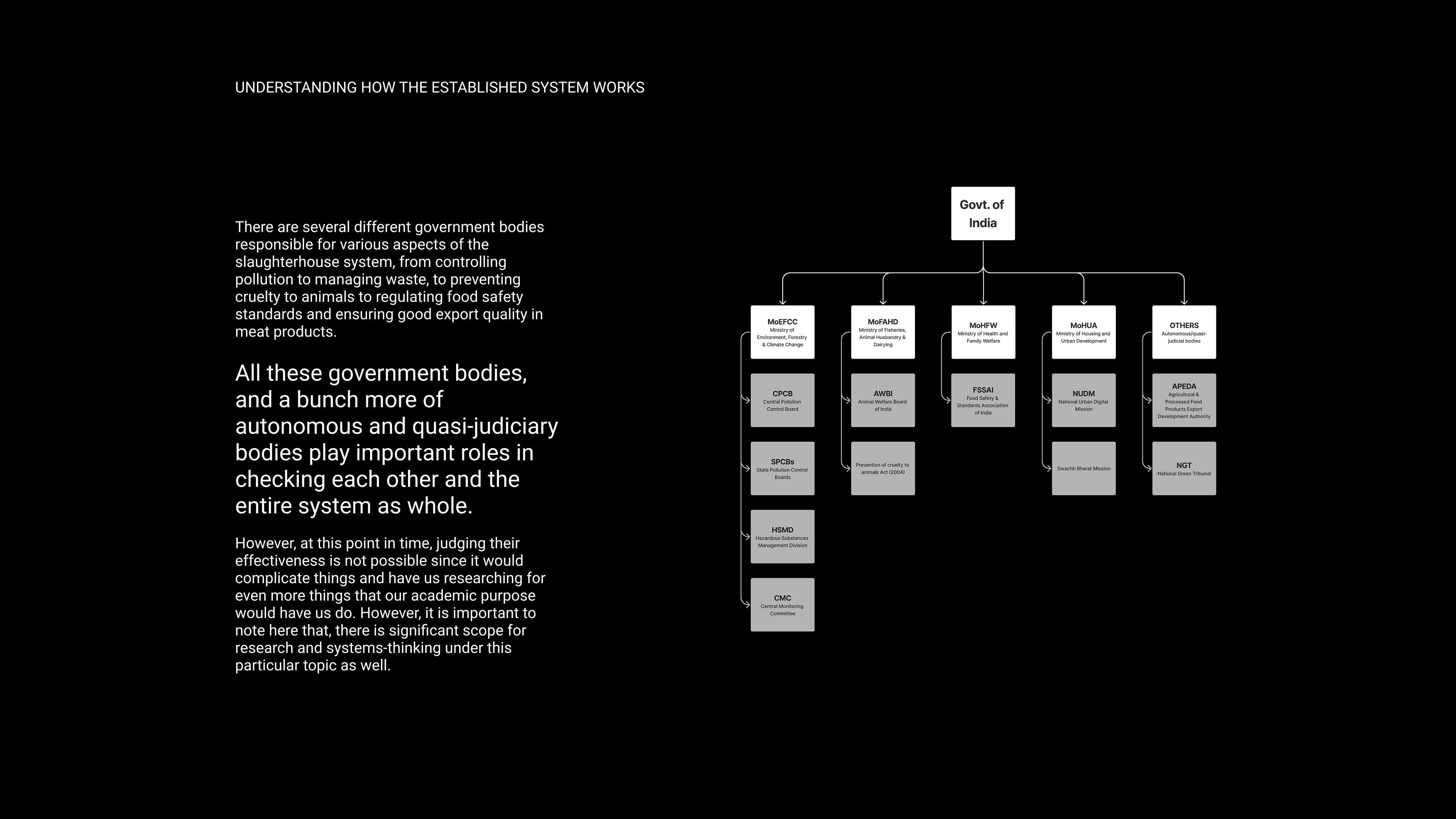
After our Ghazipur visit, we were able to conduct a big-picture analysis of the entire slaughterhouse system in India. We compiled the information we had collected, organized it into easily understandable chunks for people, connected the dots, and laid out the big picture for everyone to behold.
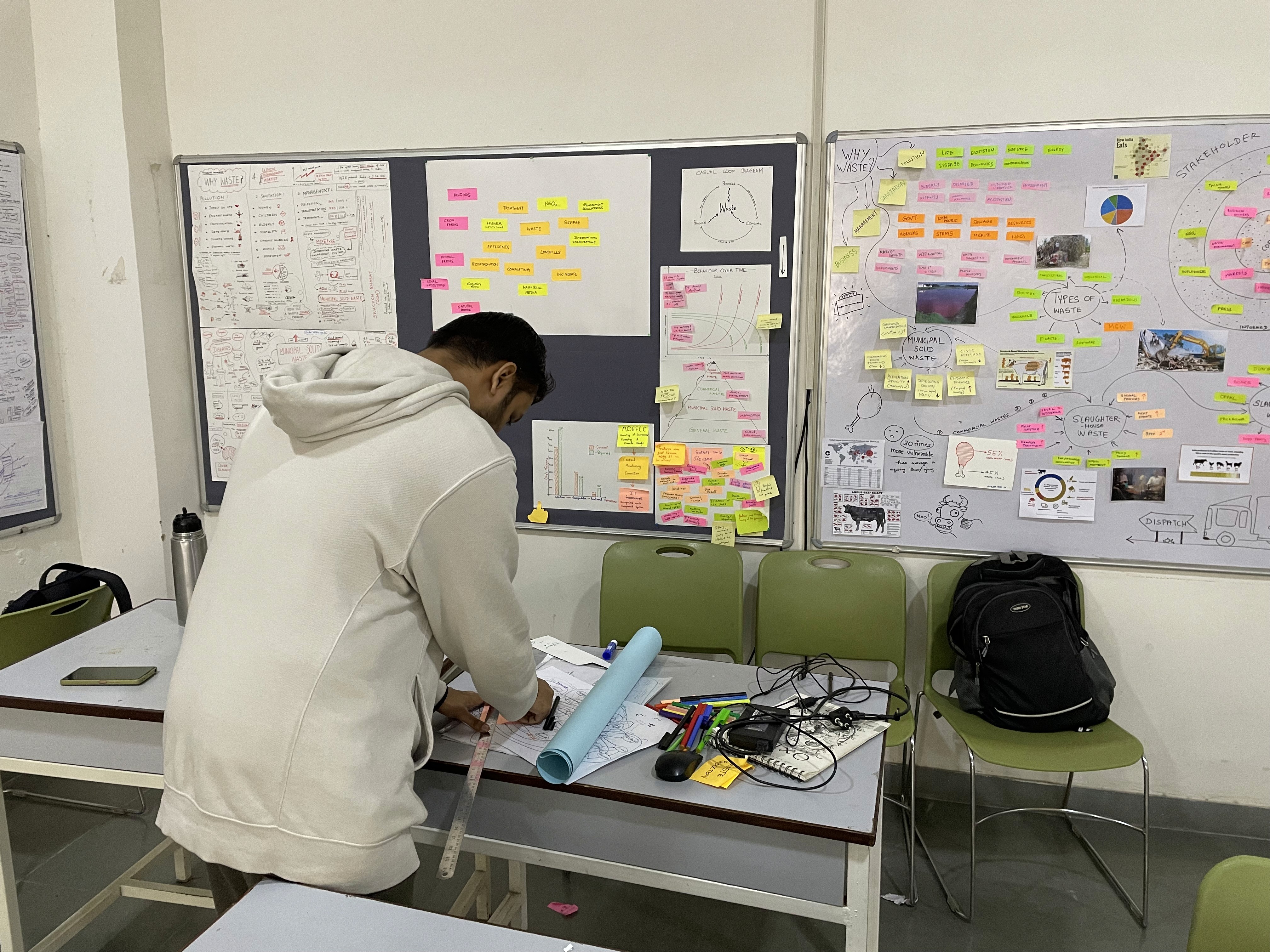
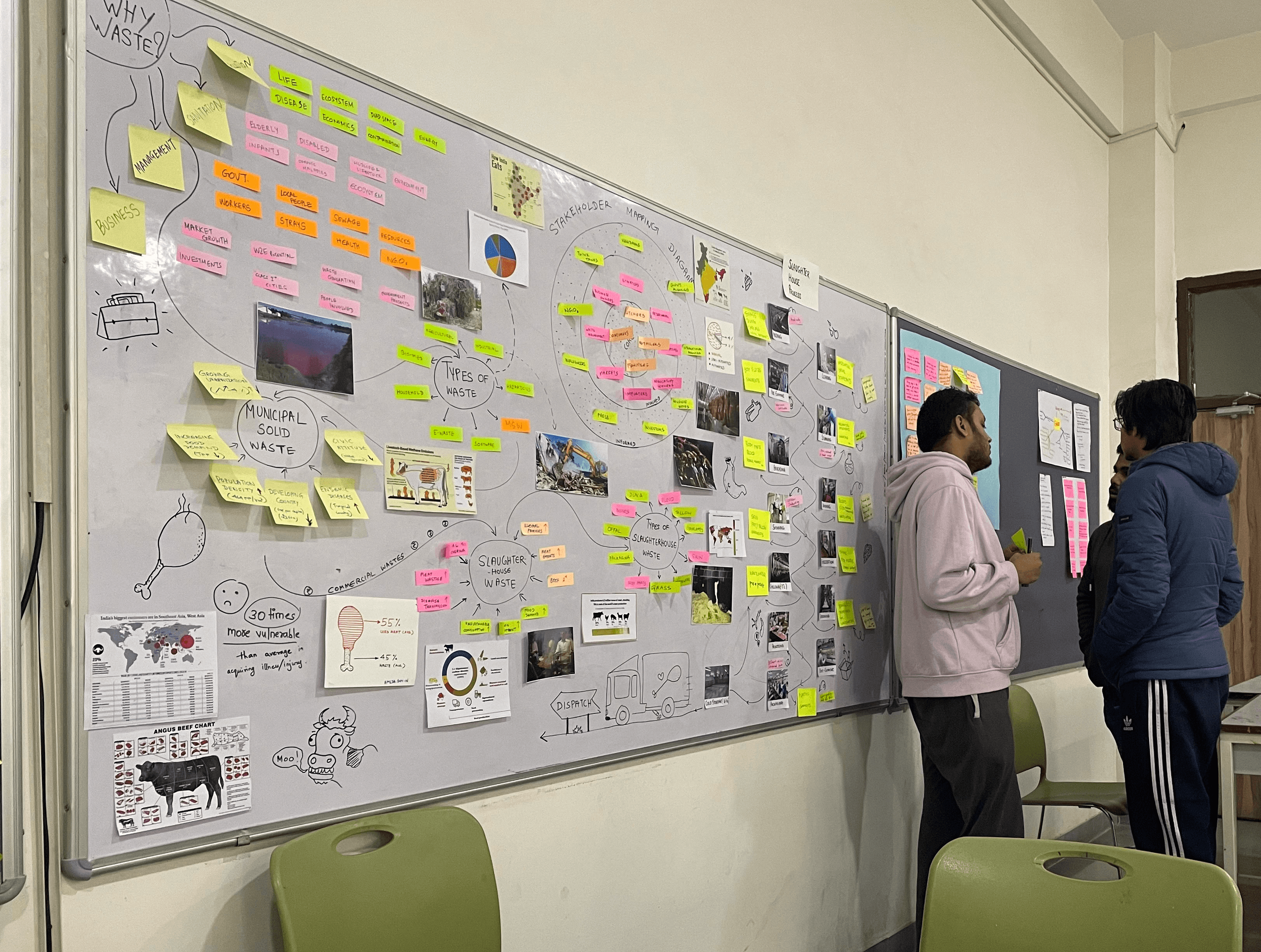
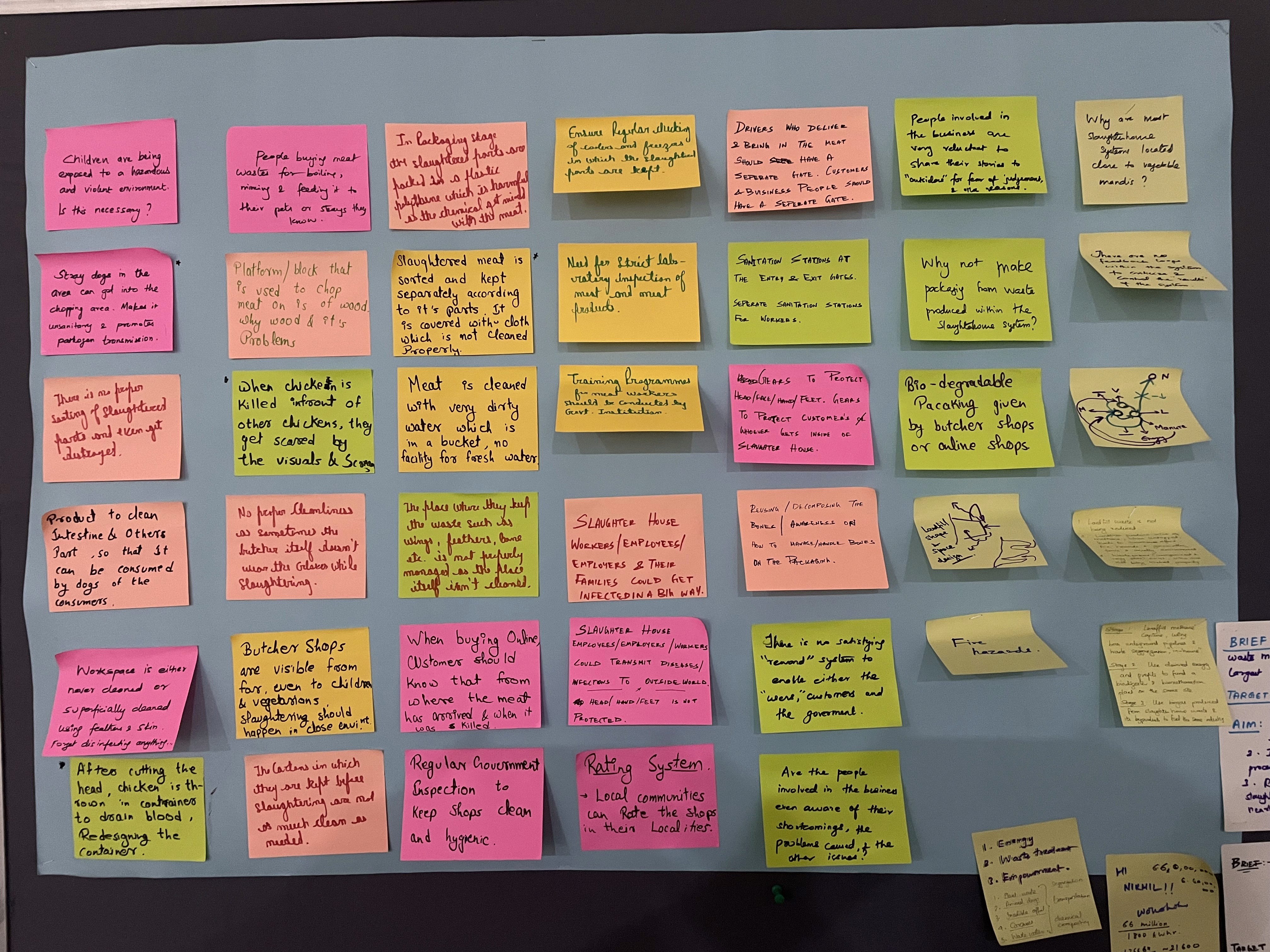
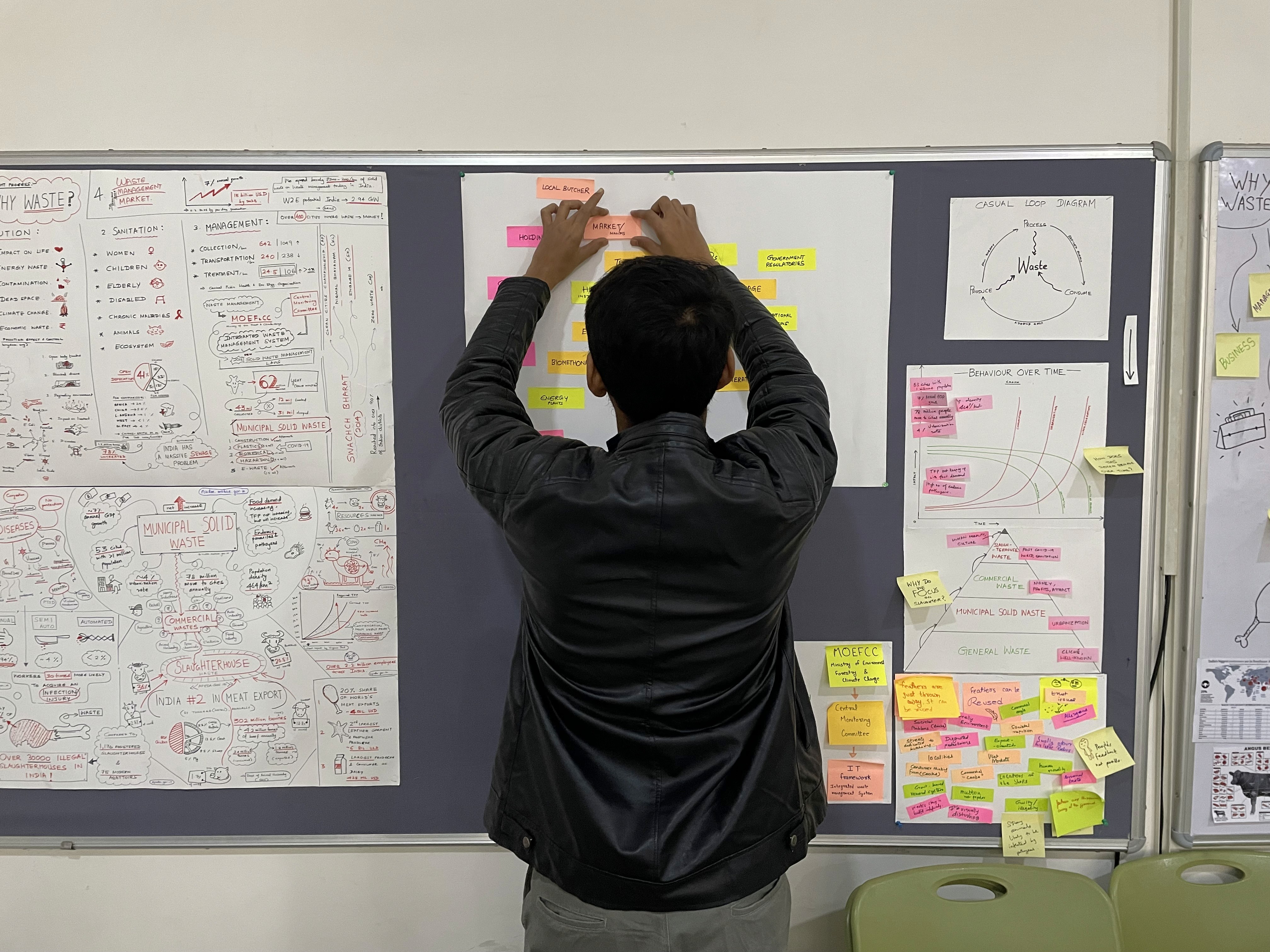
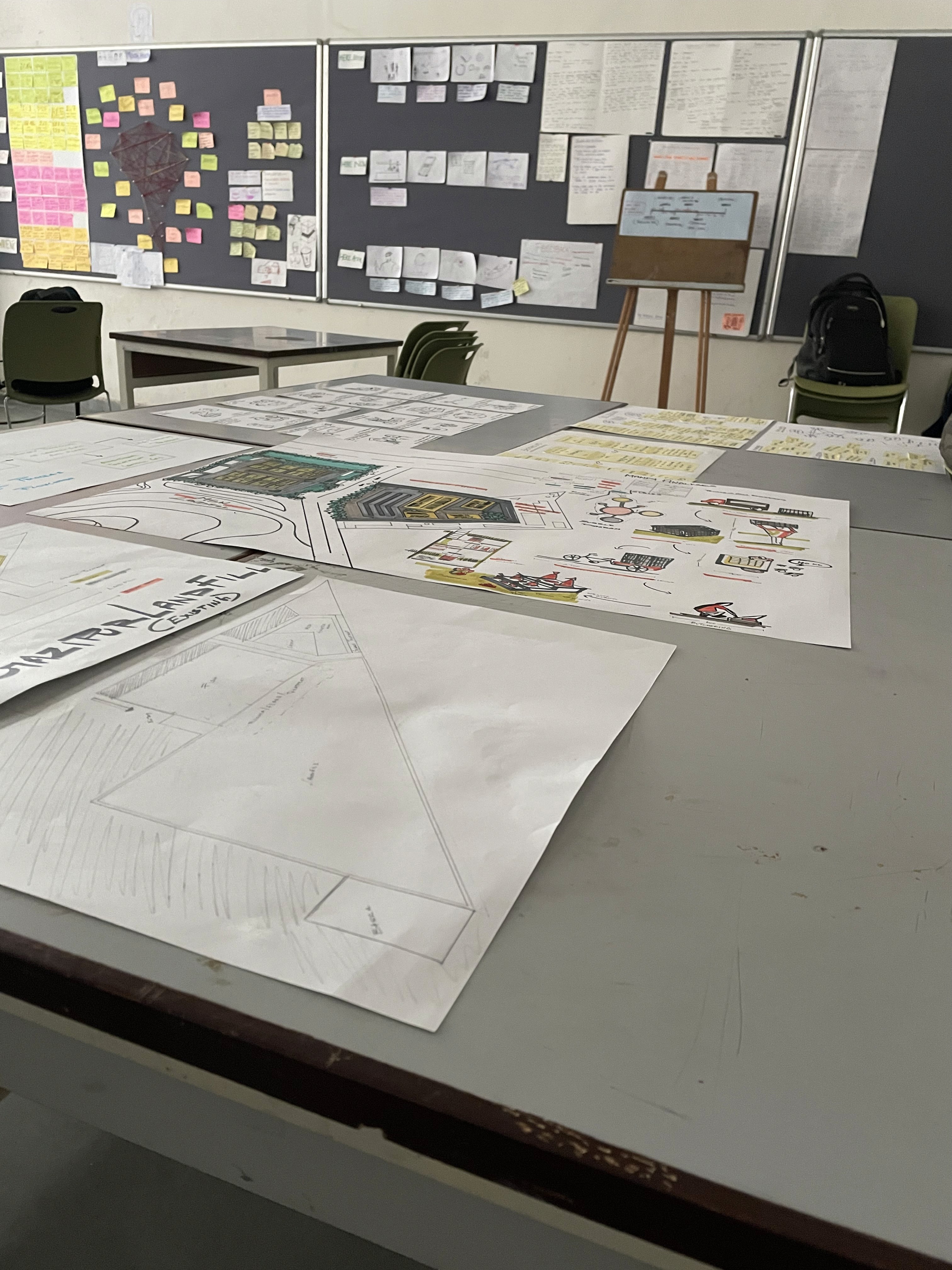
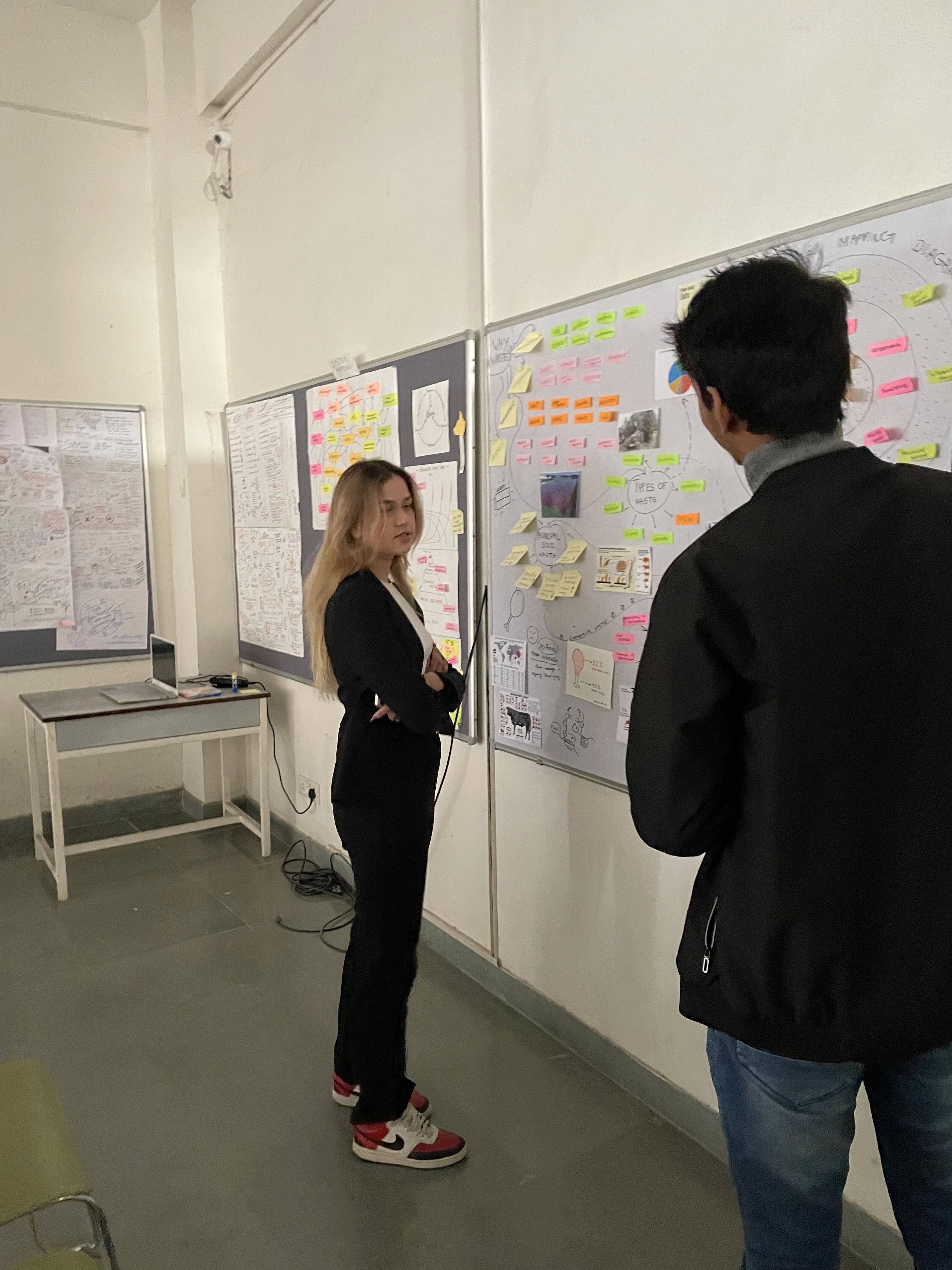
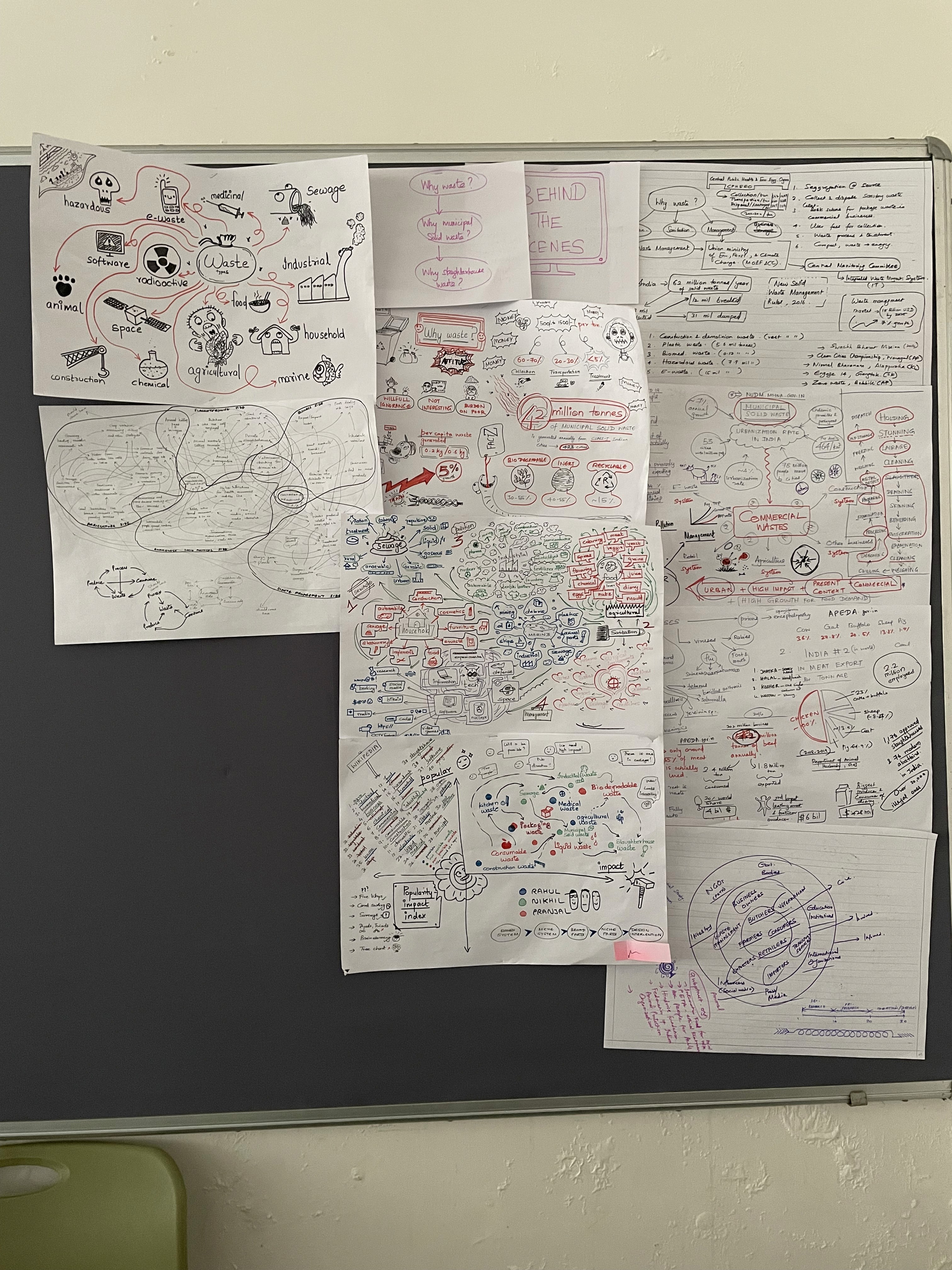
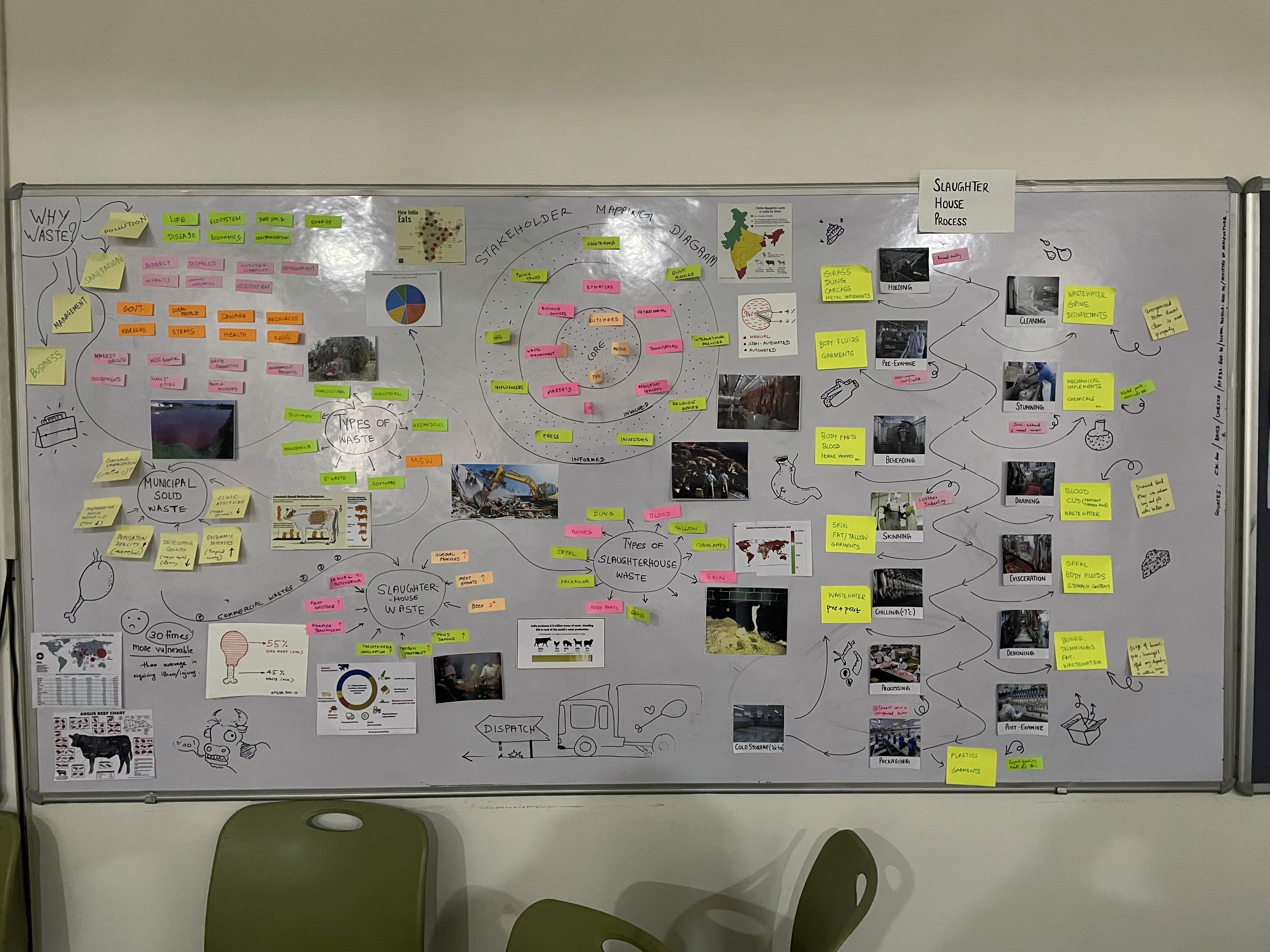
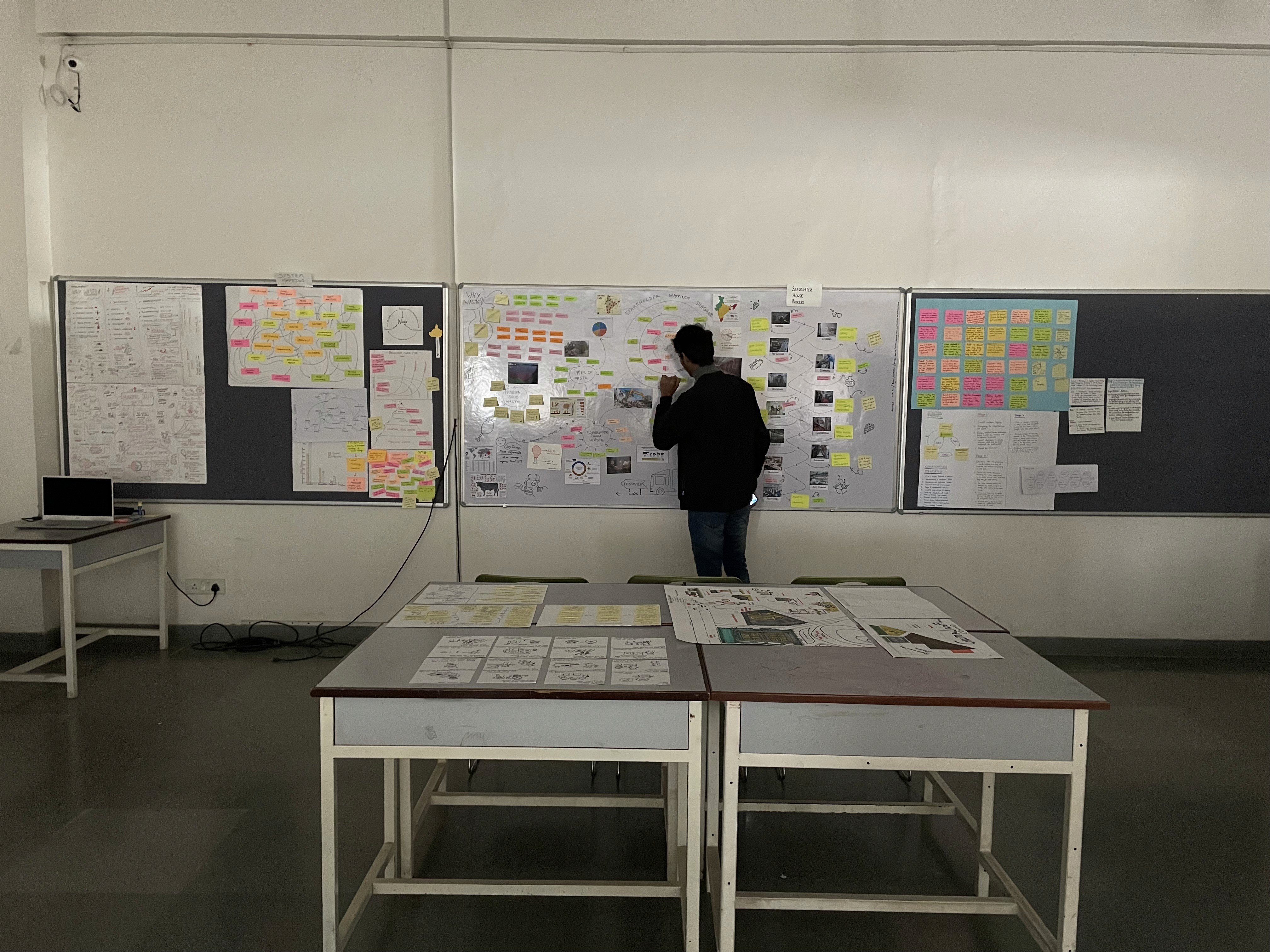
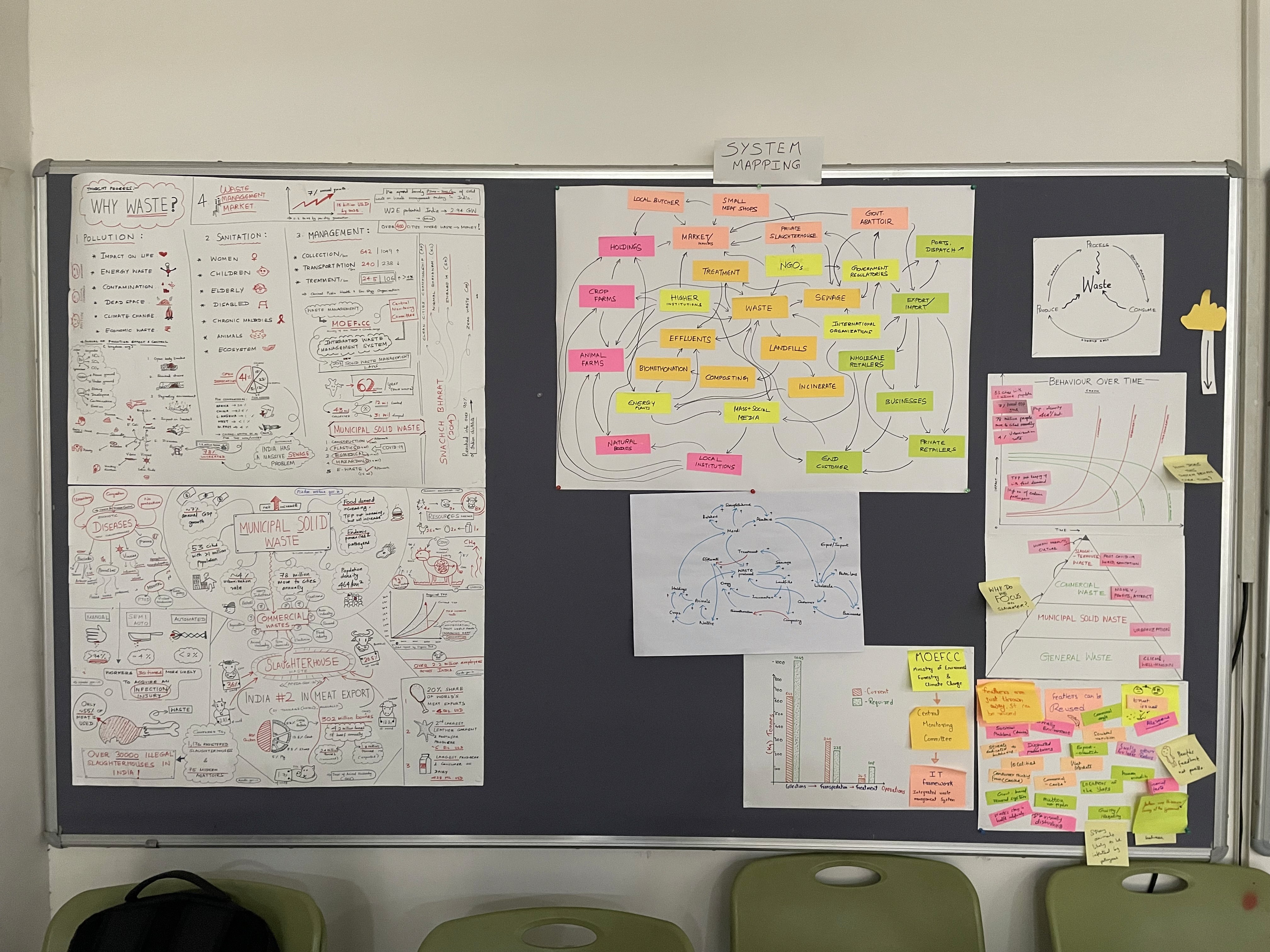
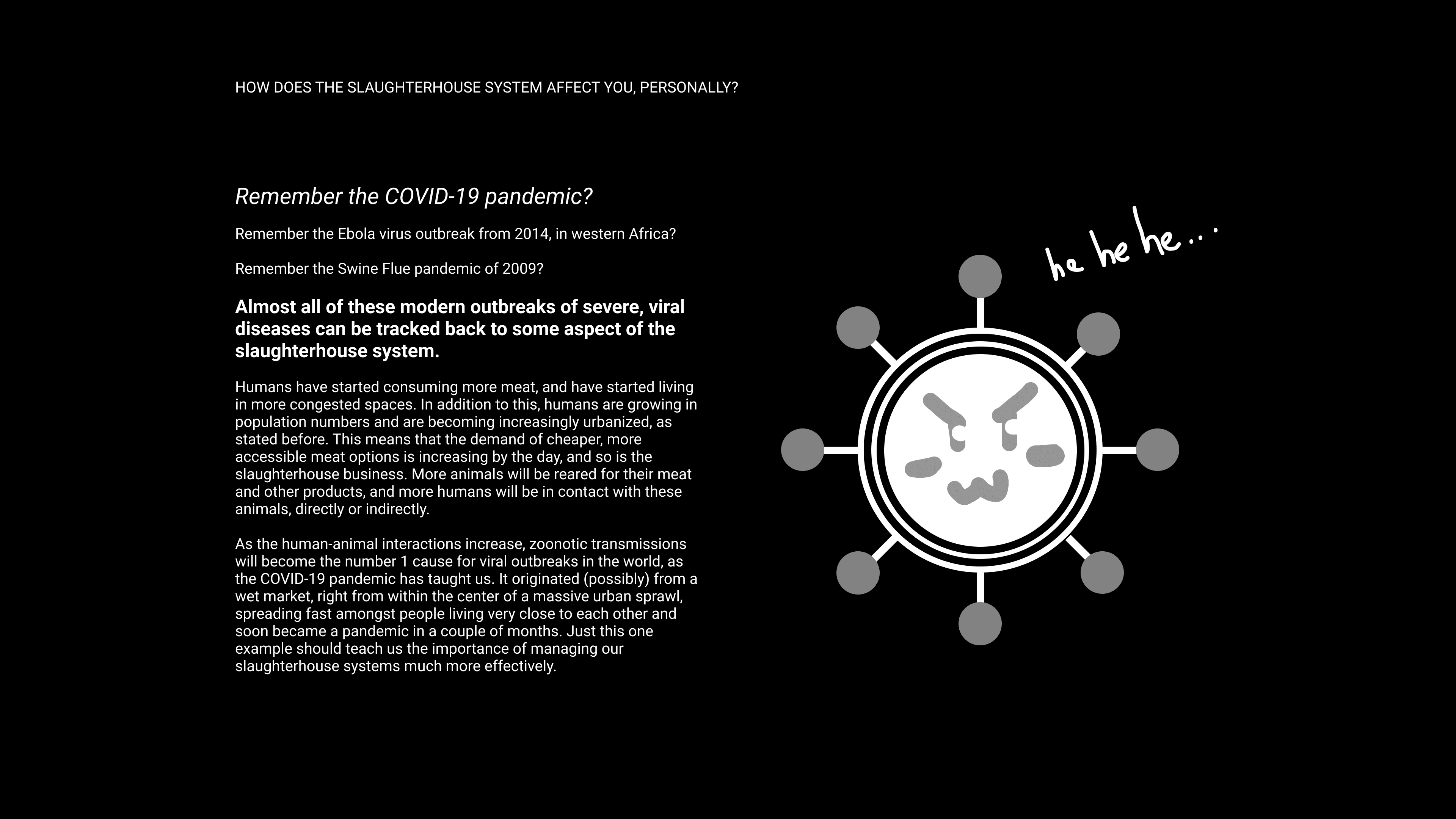
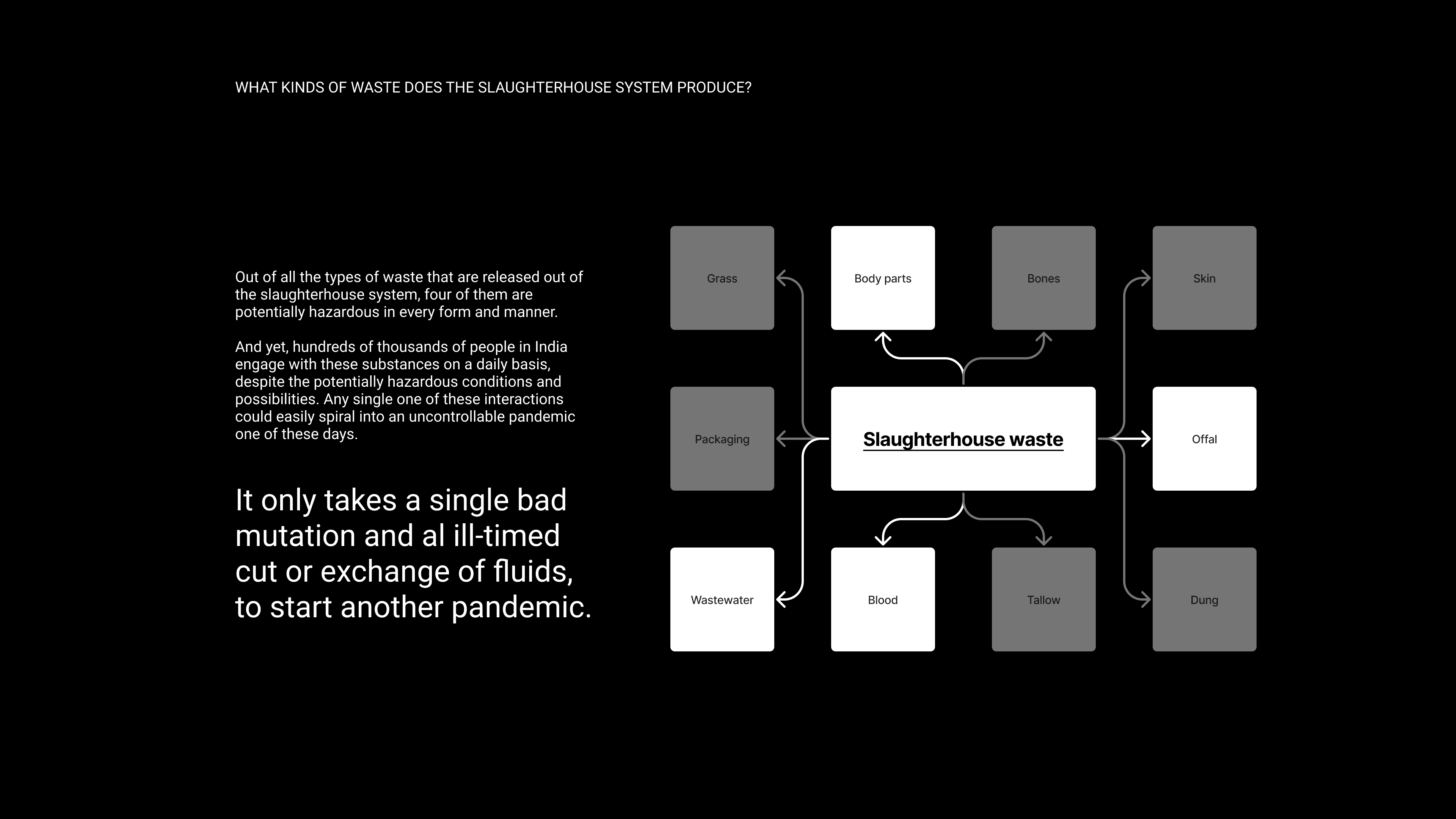
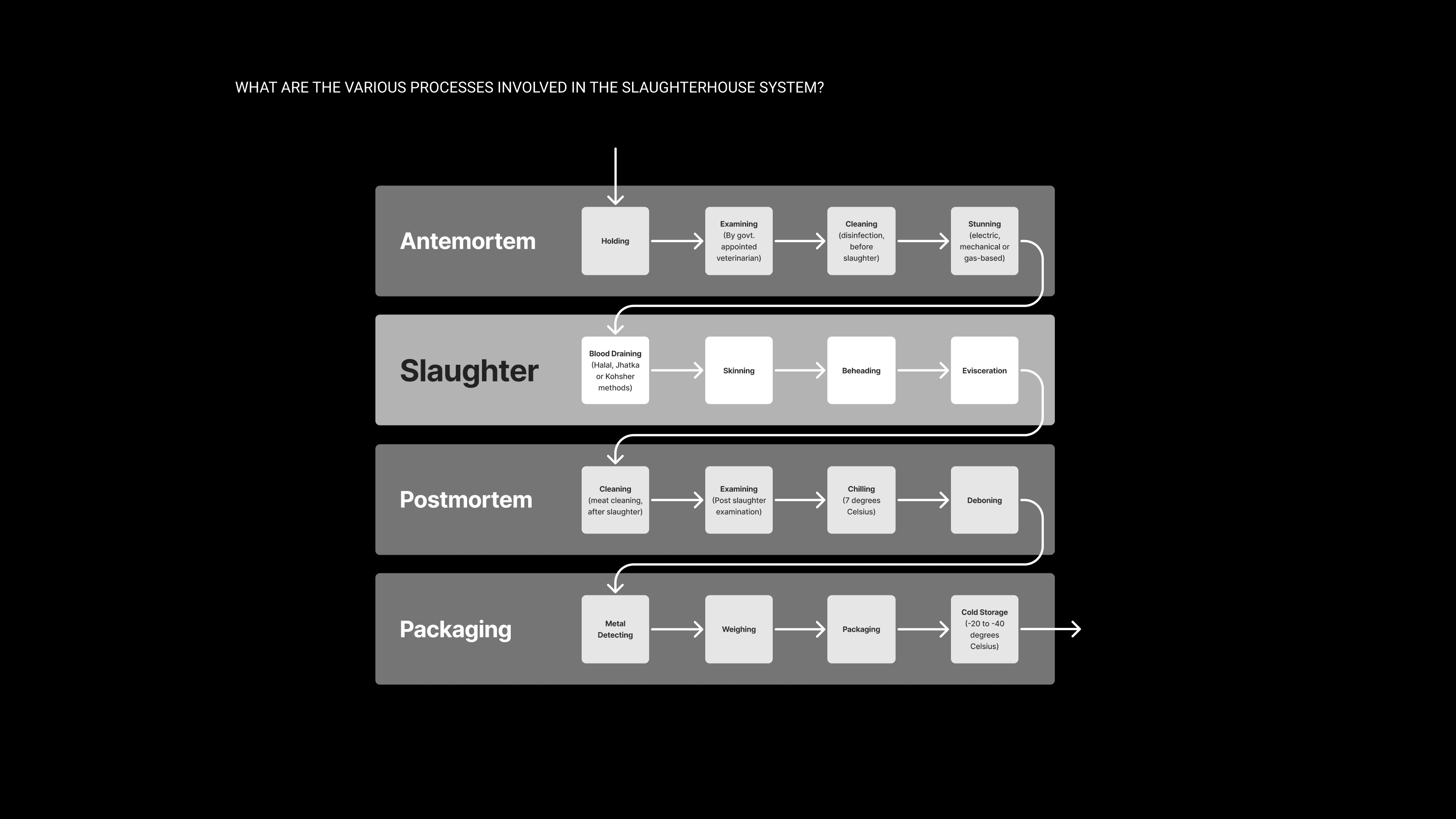
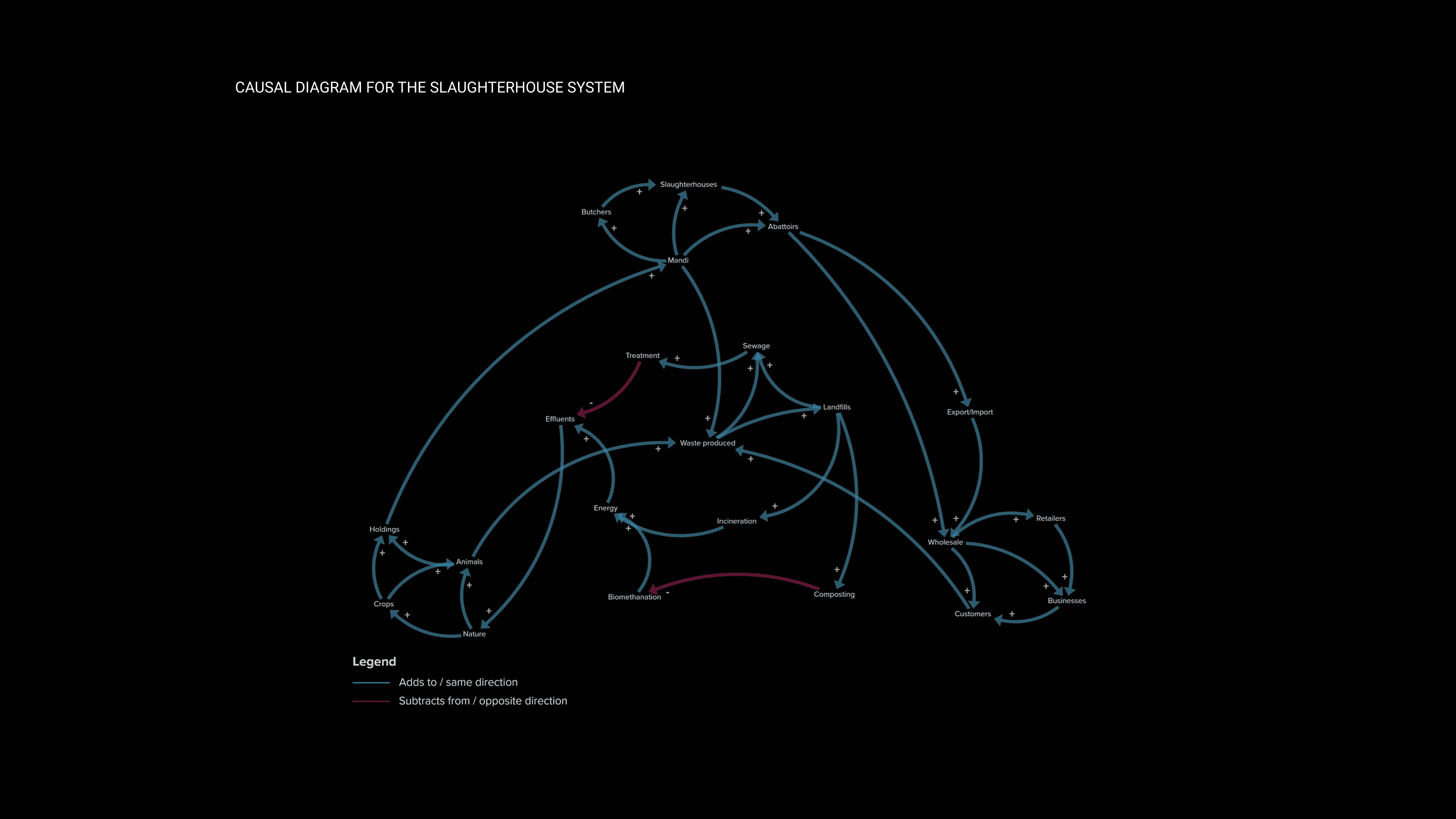
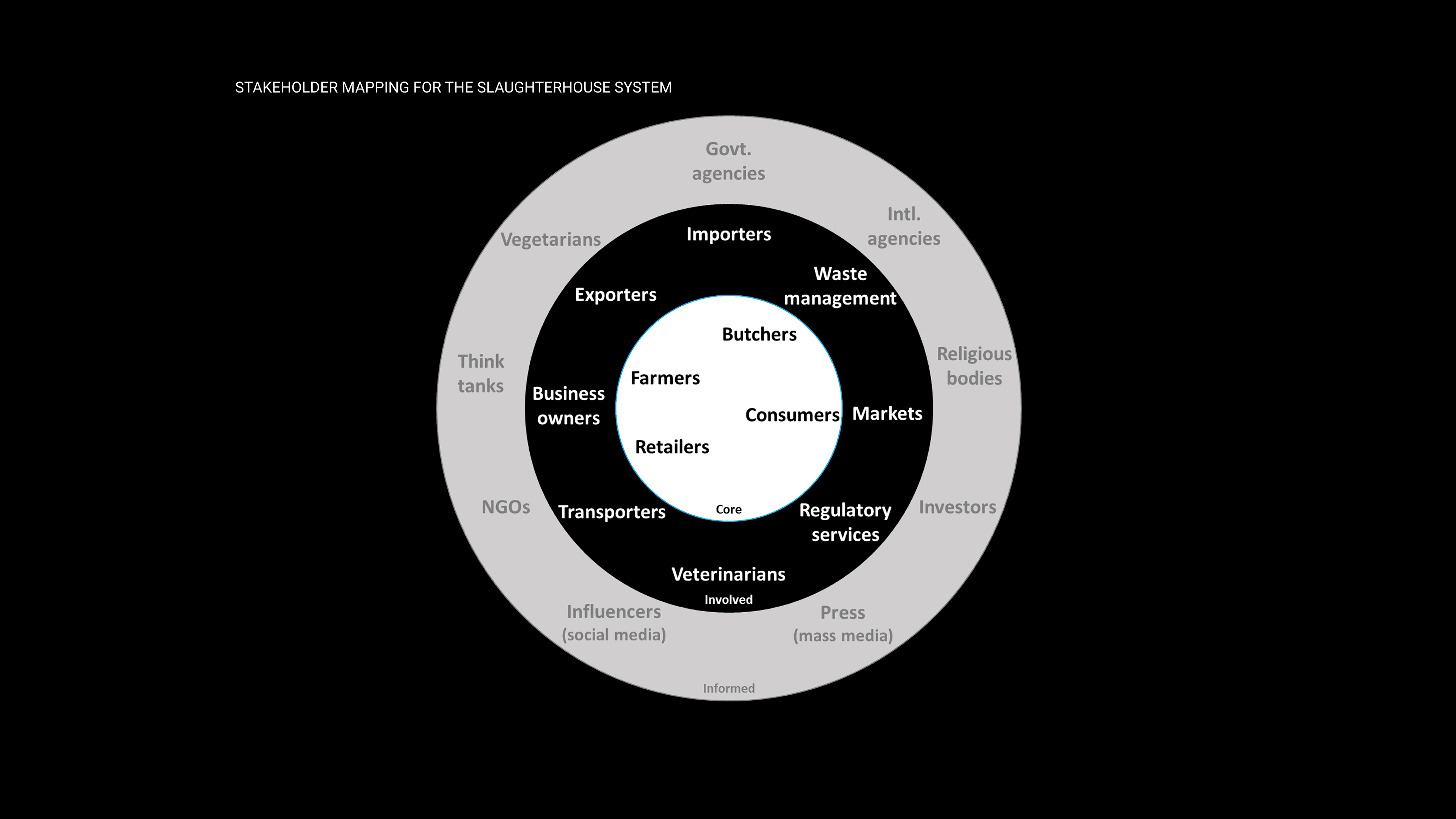
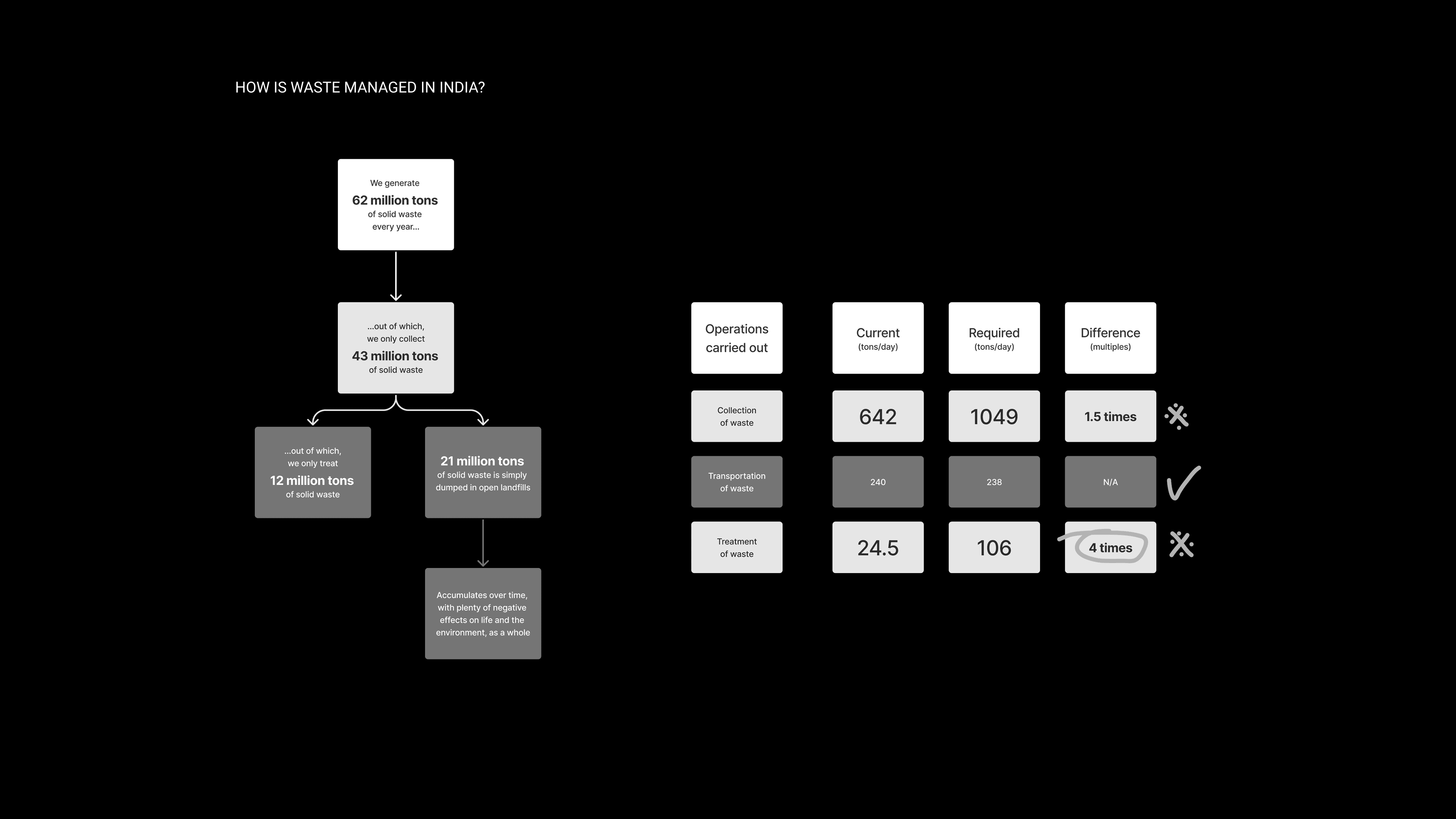
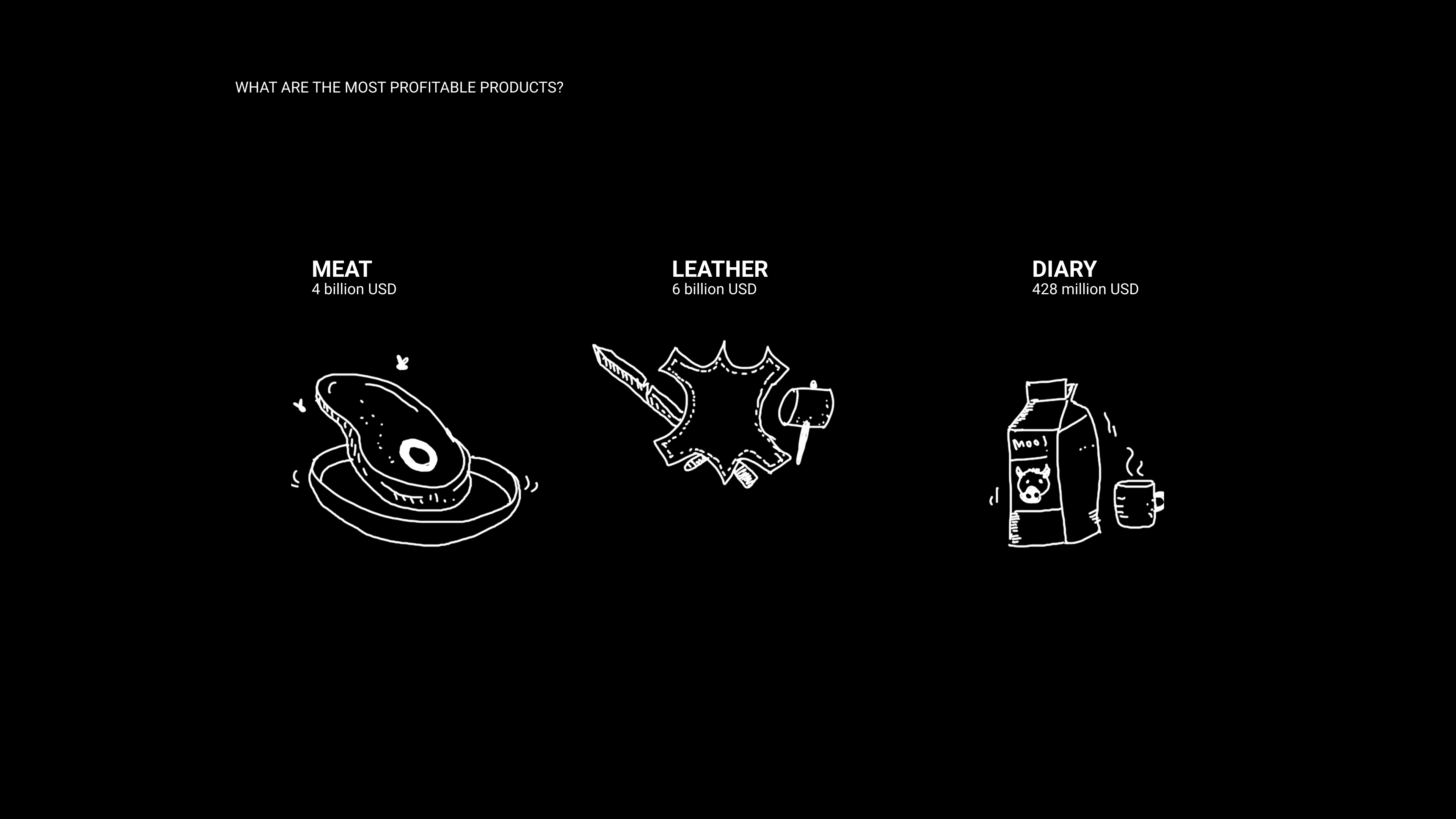
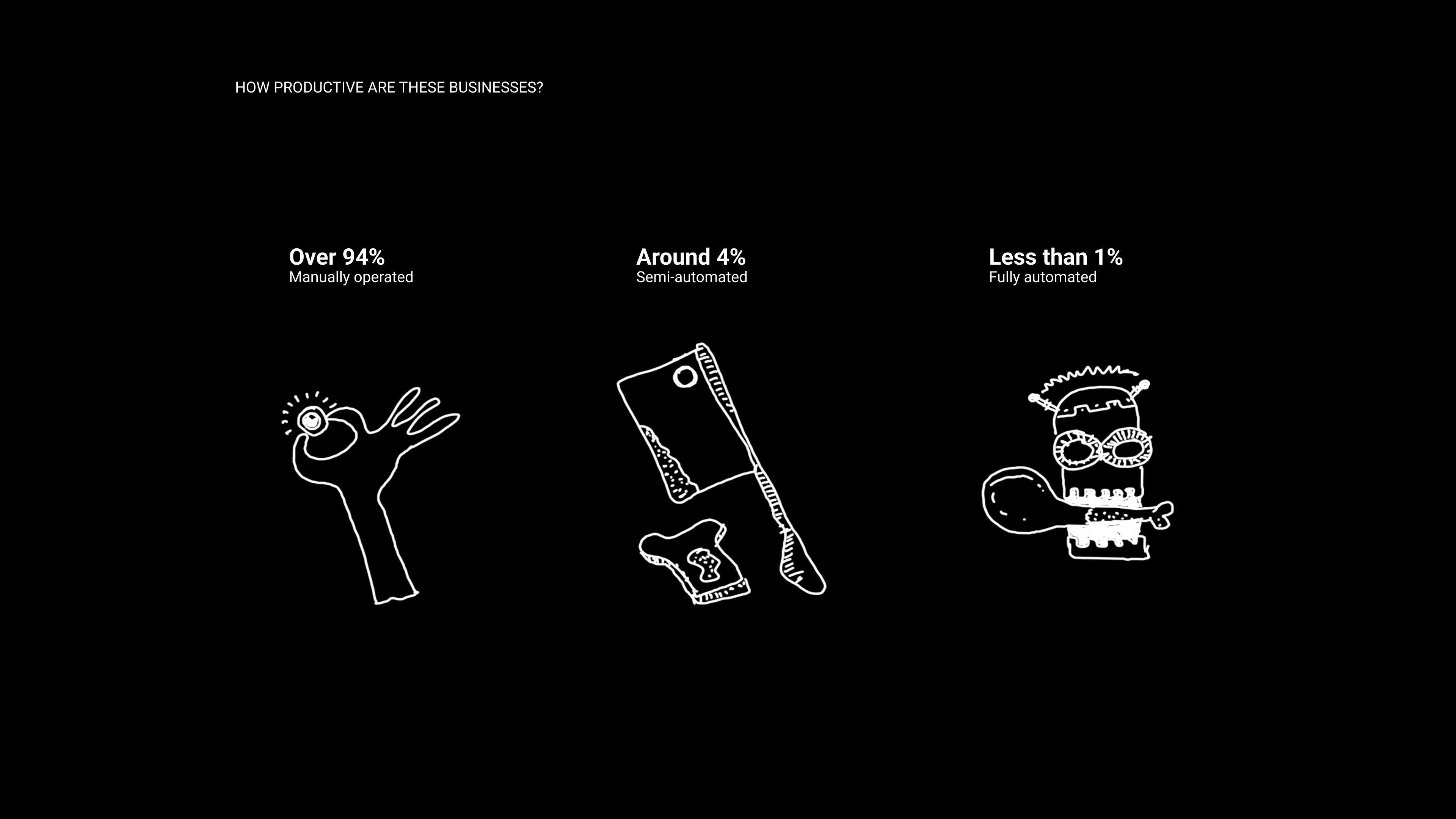
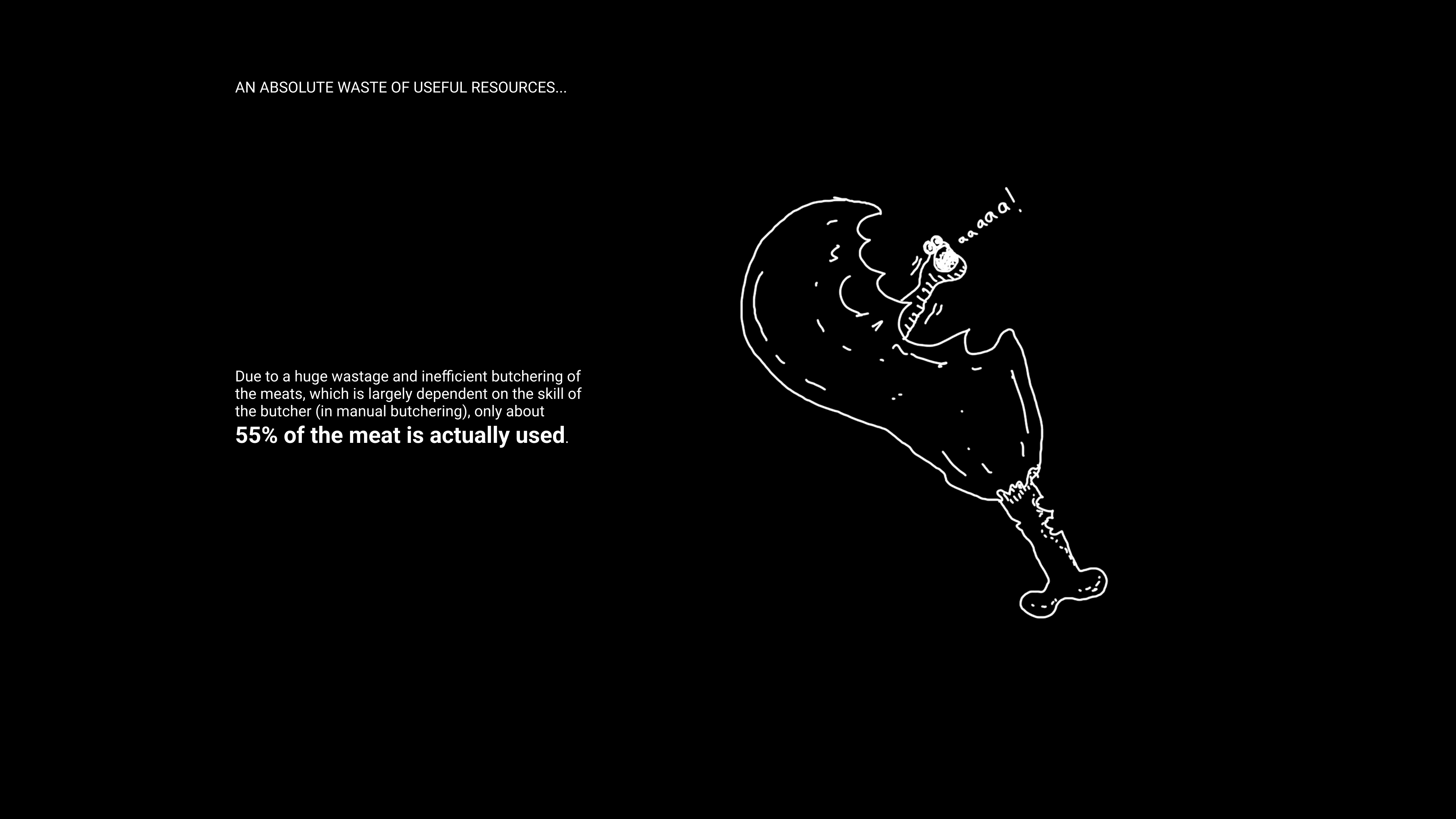
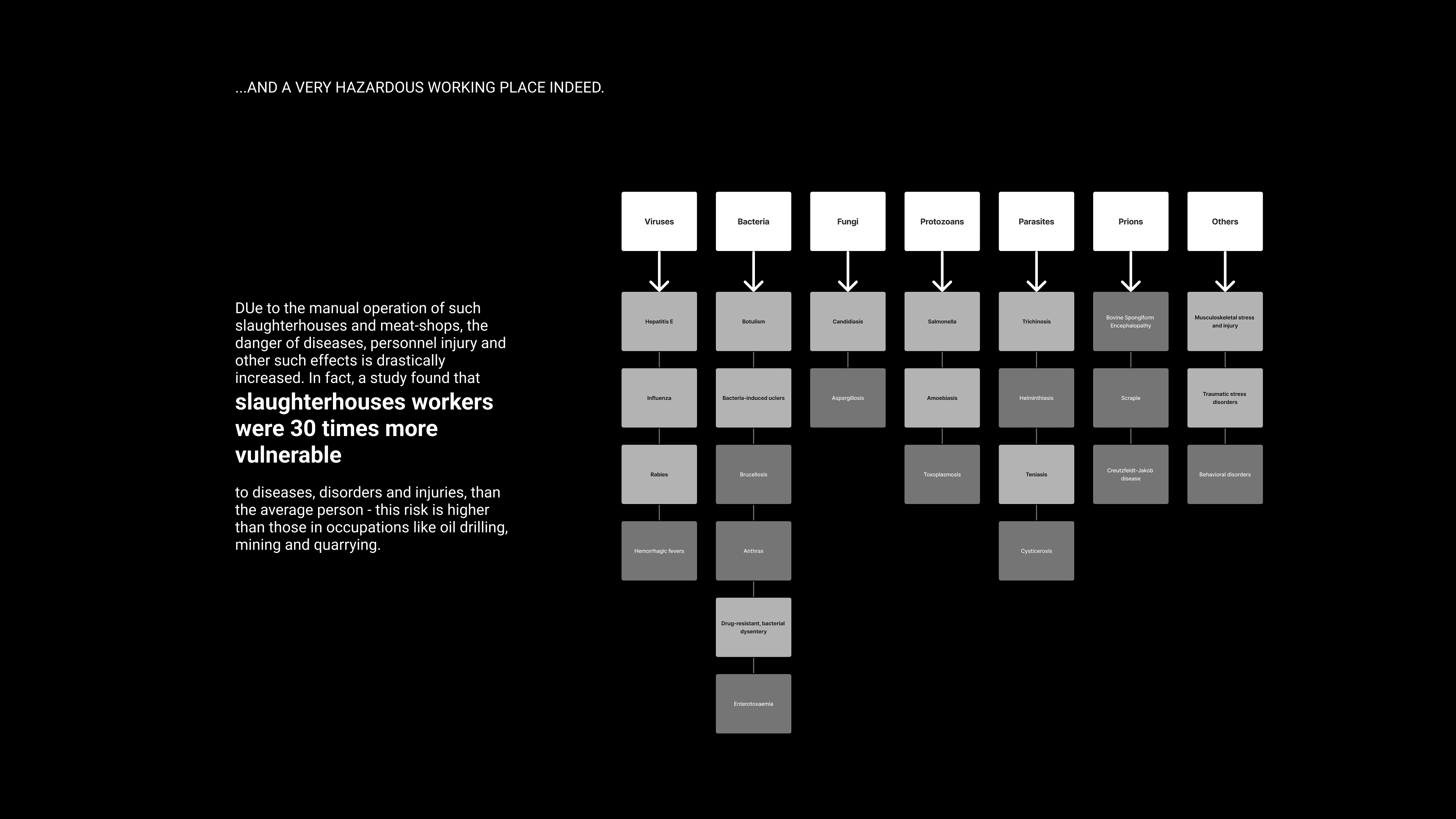
After mapping the system and having a look at the bigger picture, it was time to move on to the nitty-gritty elements of the system - the microeconomics, the condition of the system and the constraints that could be involved in the reformation. To determine the future potential, we needed extensive research of the system's past and present.
Warning: It could be a lengthy read from here on! :)
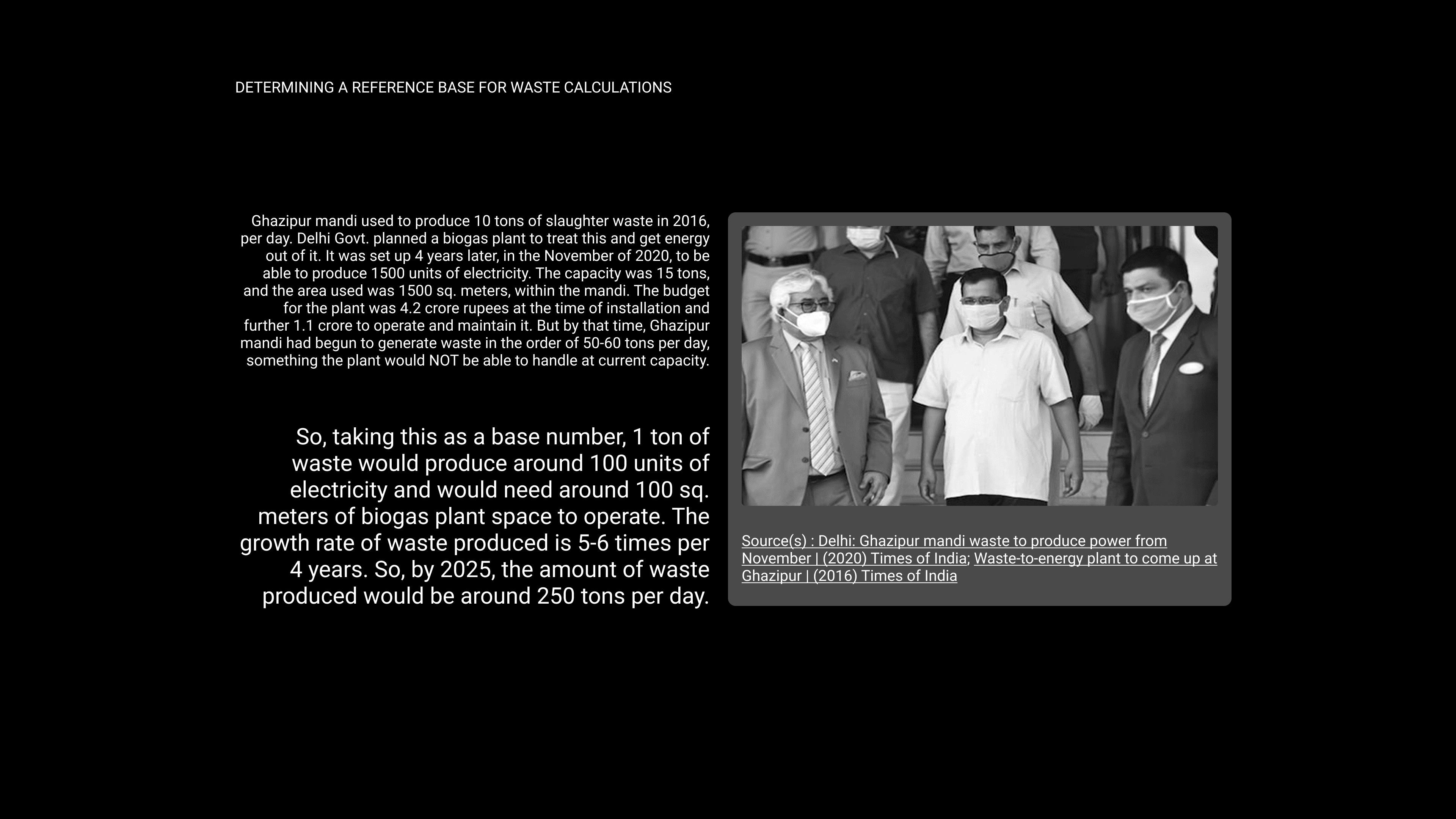
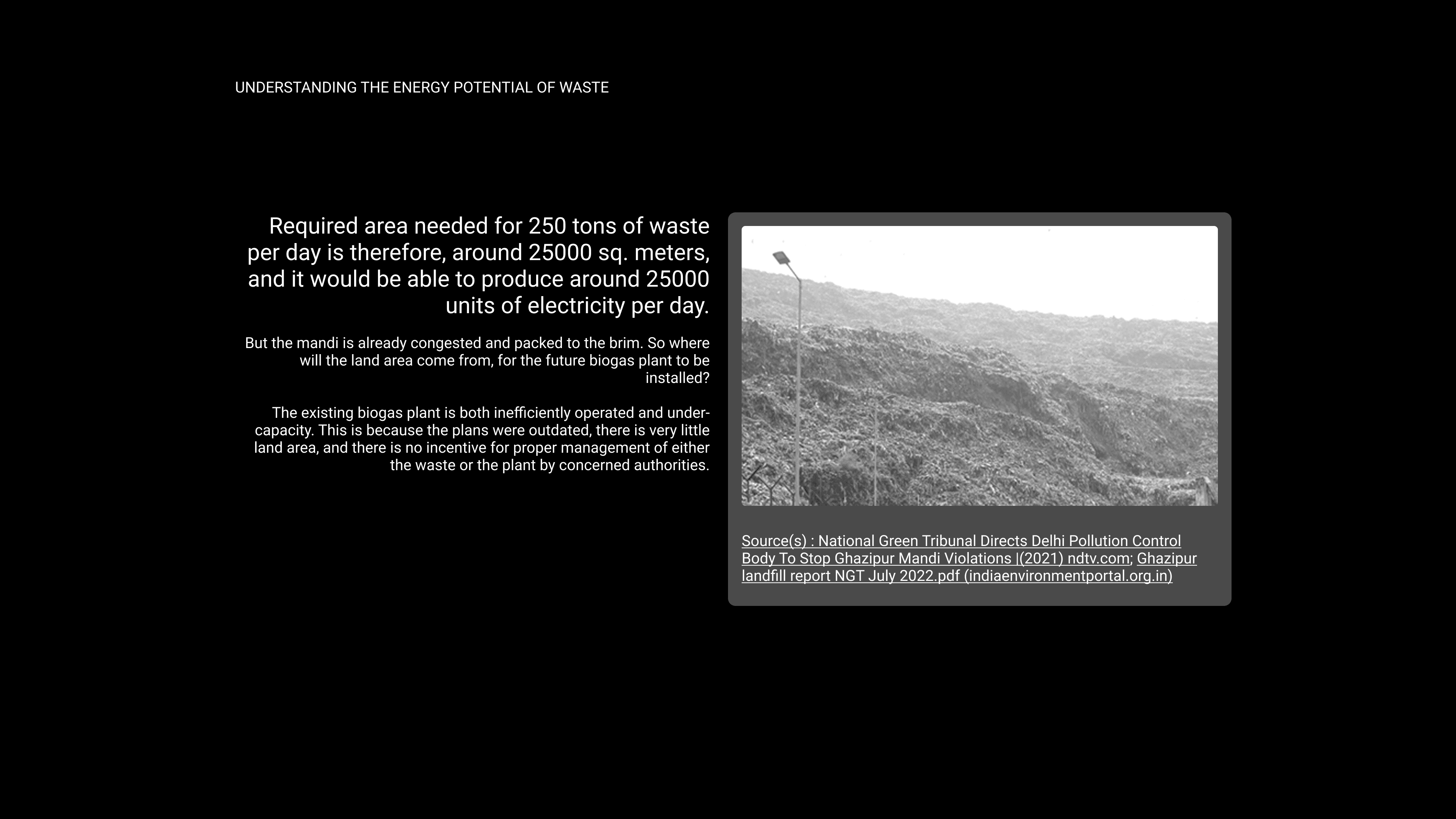
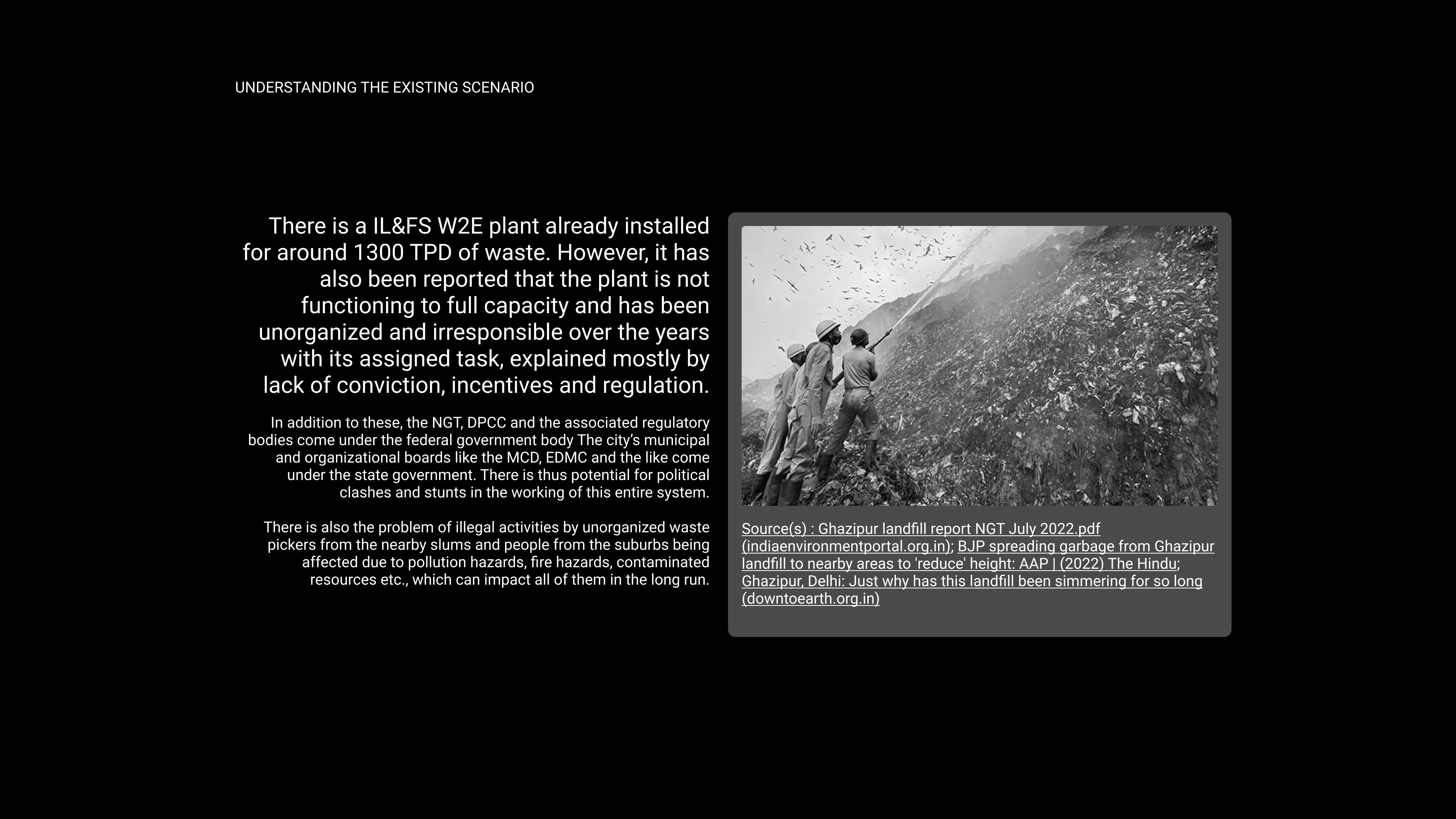
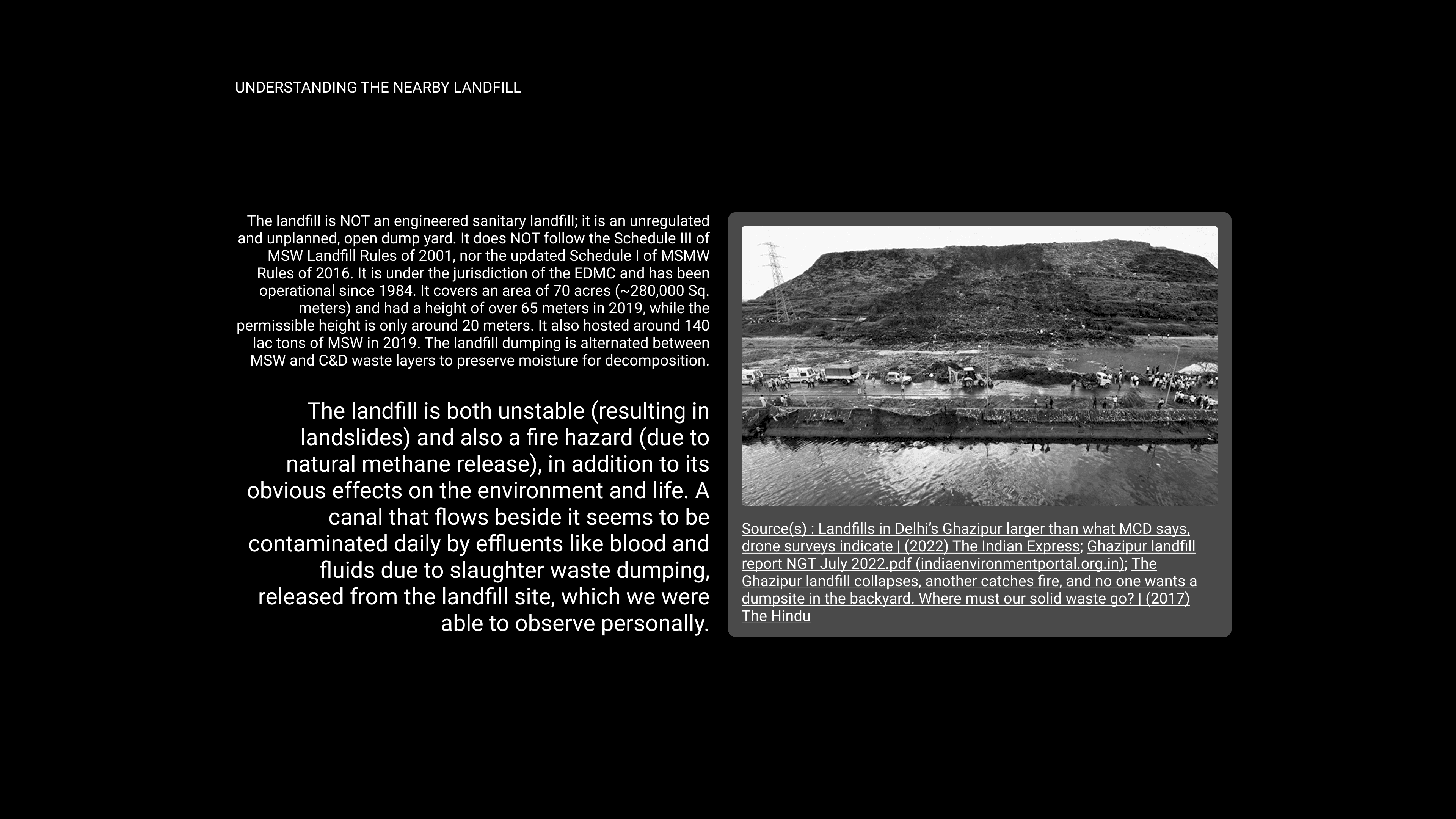
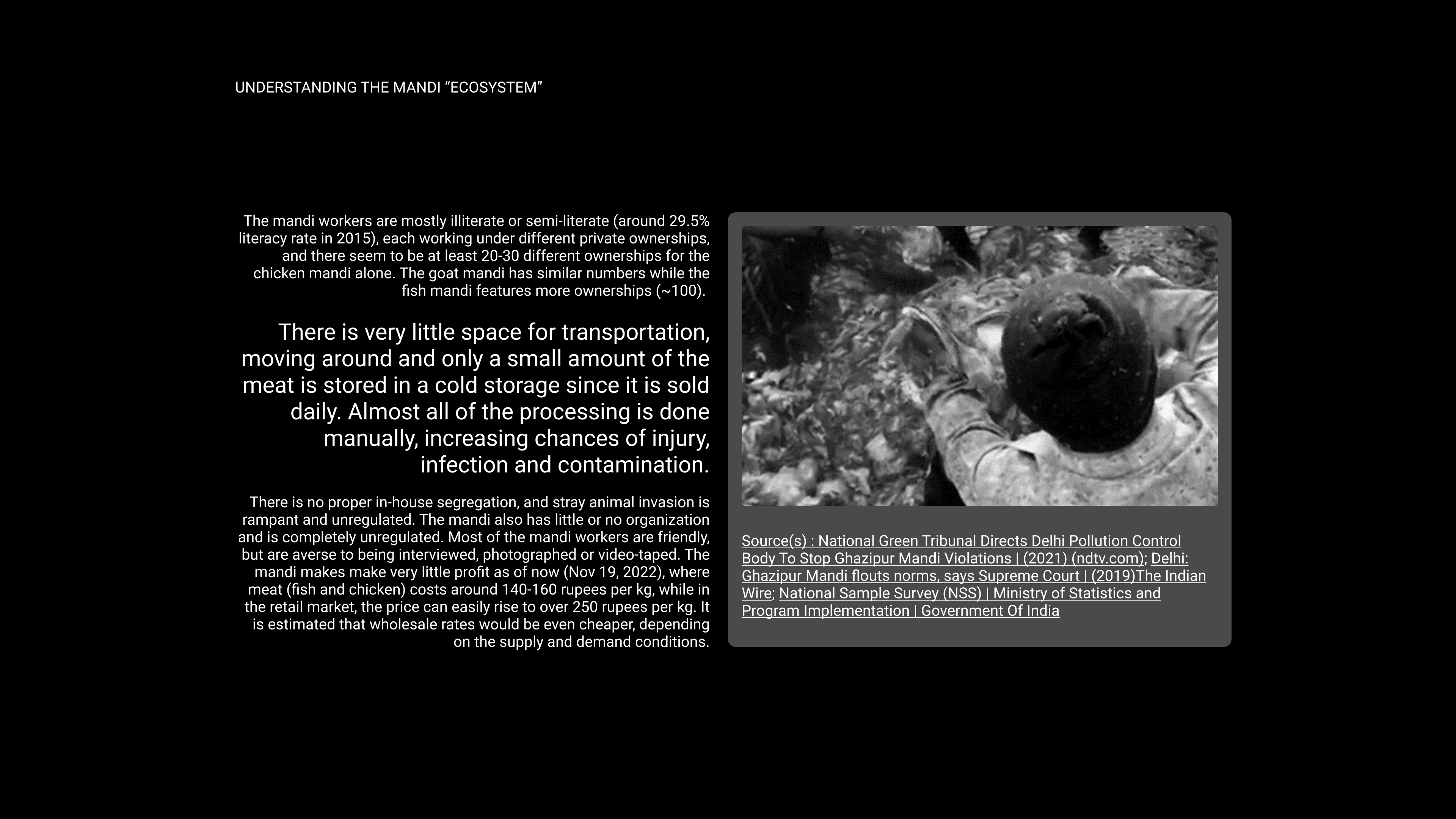
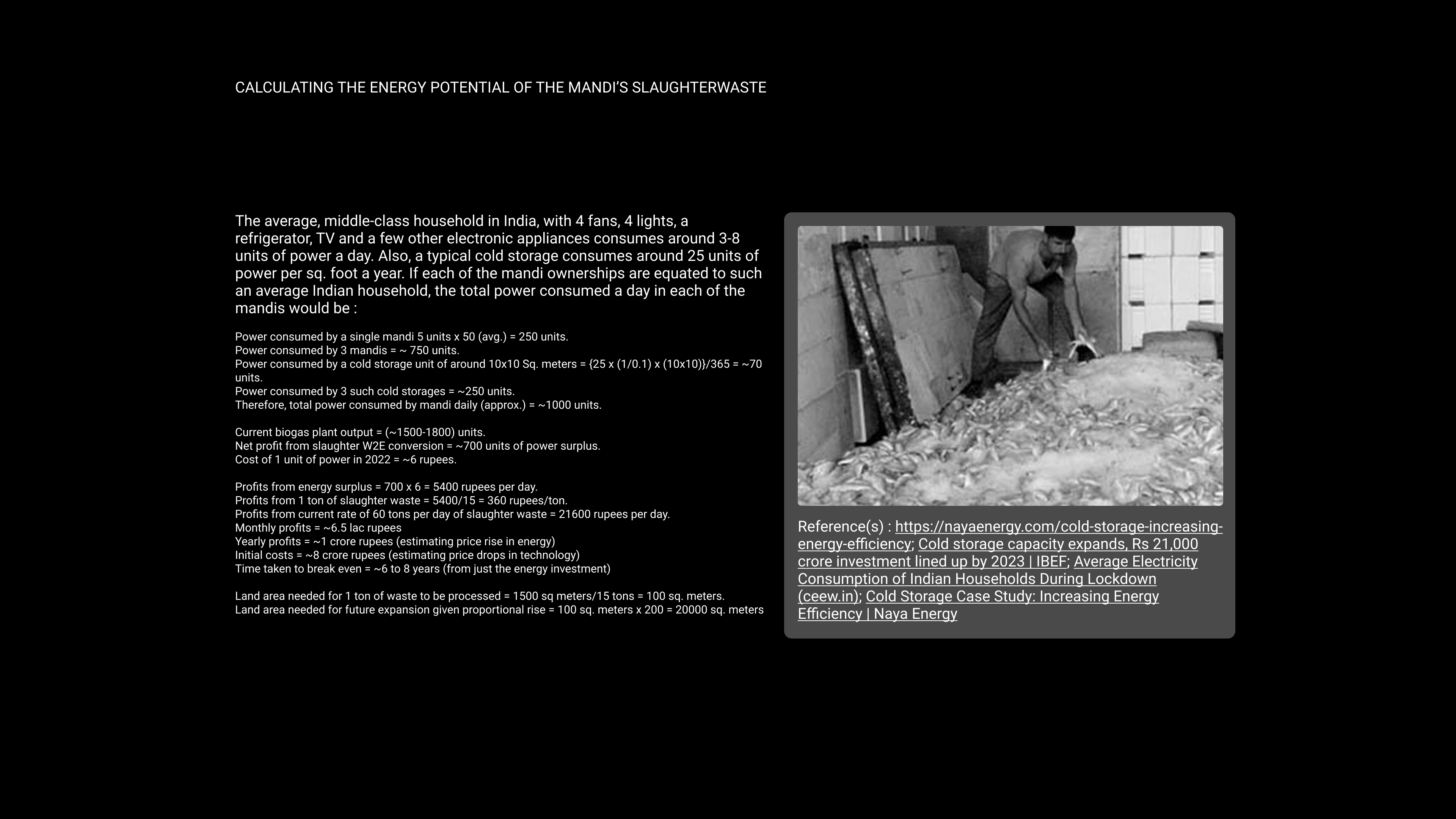
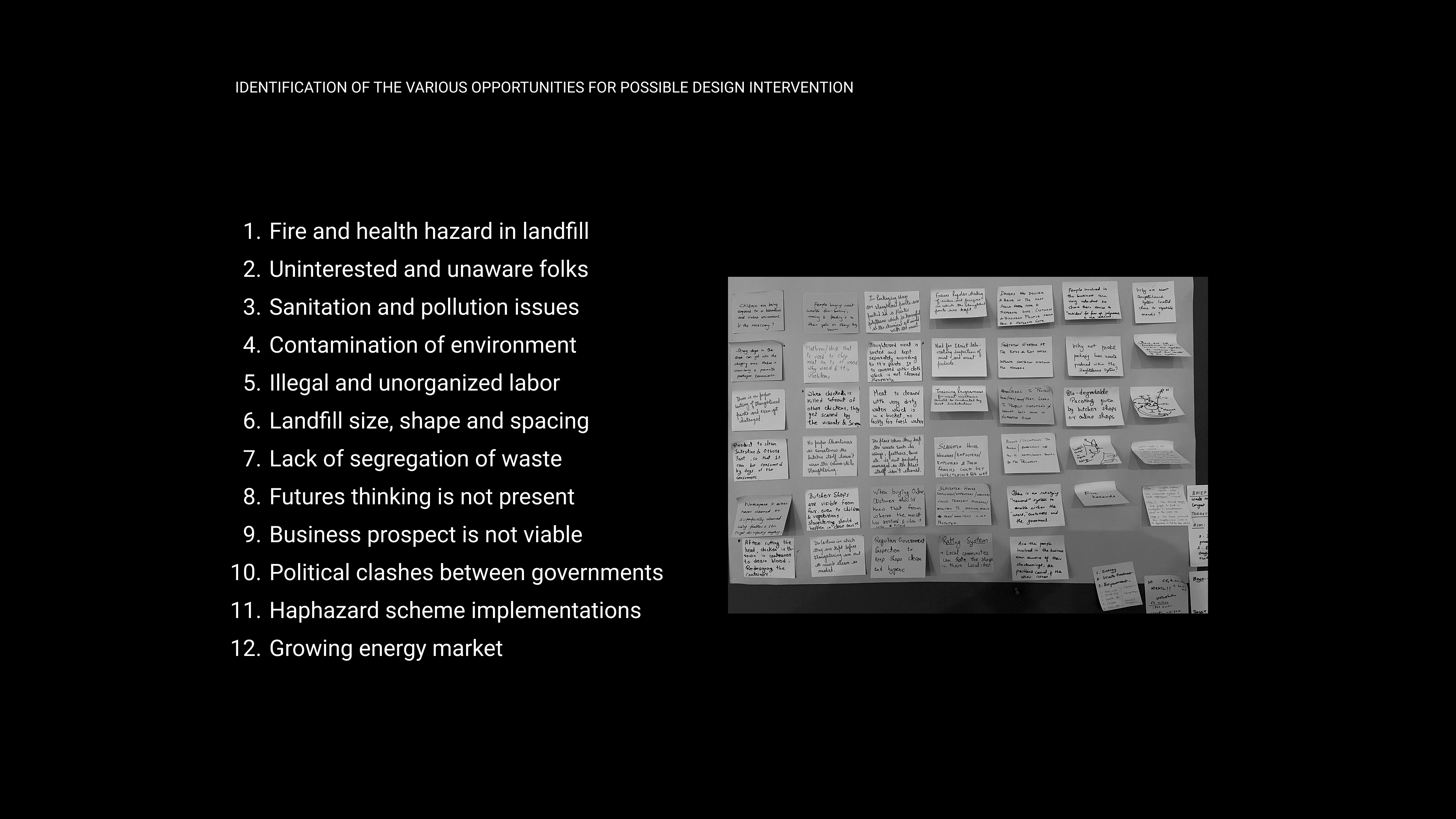
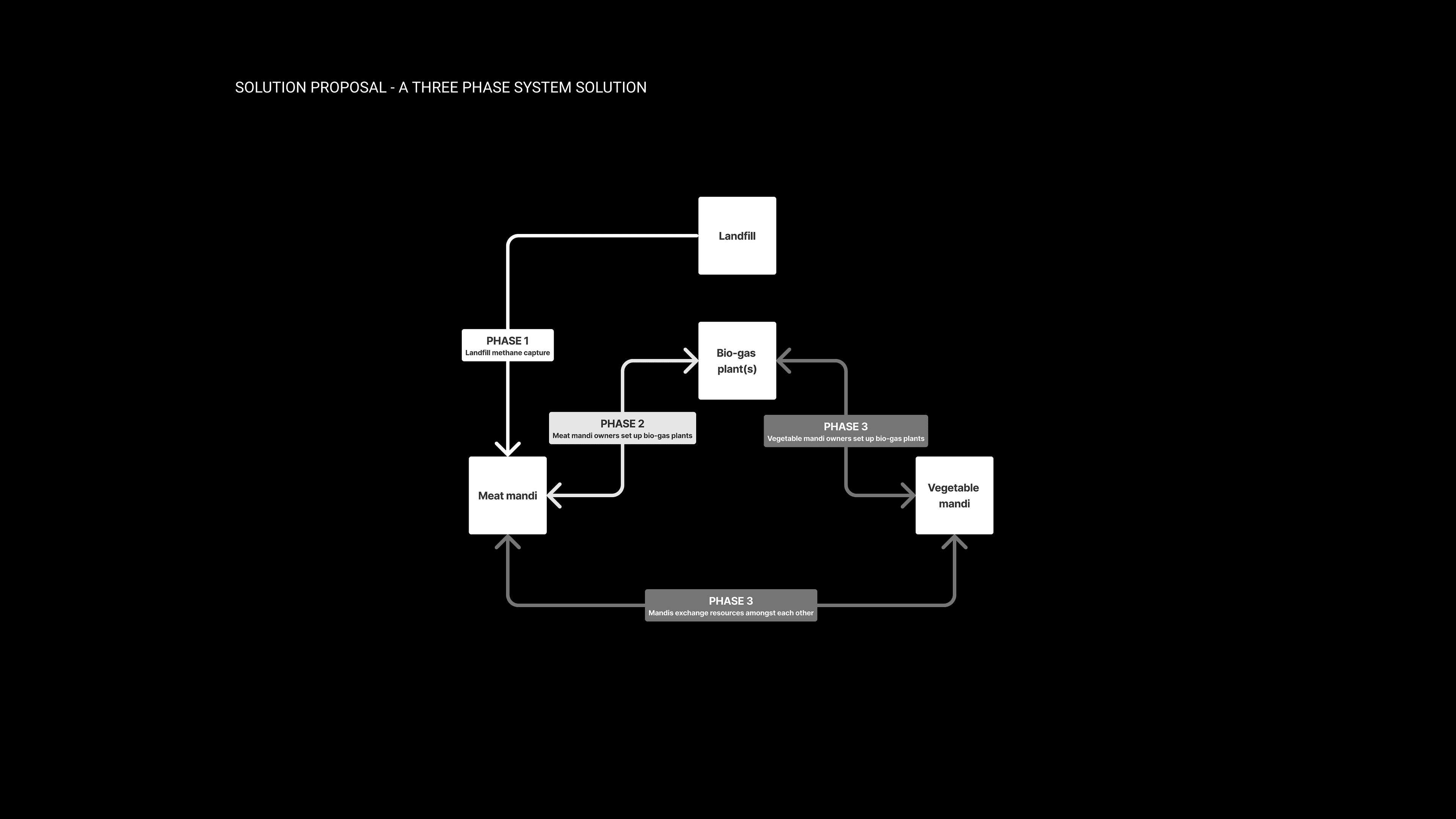
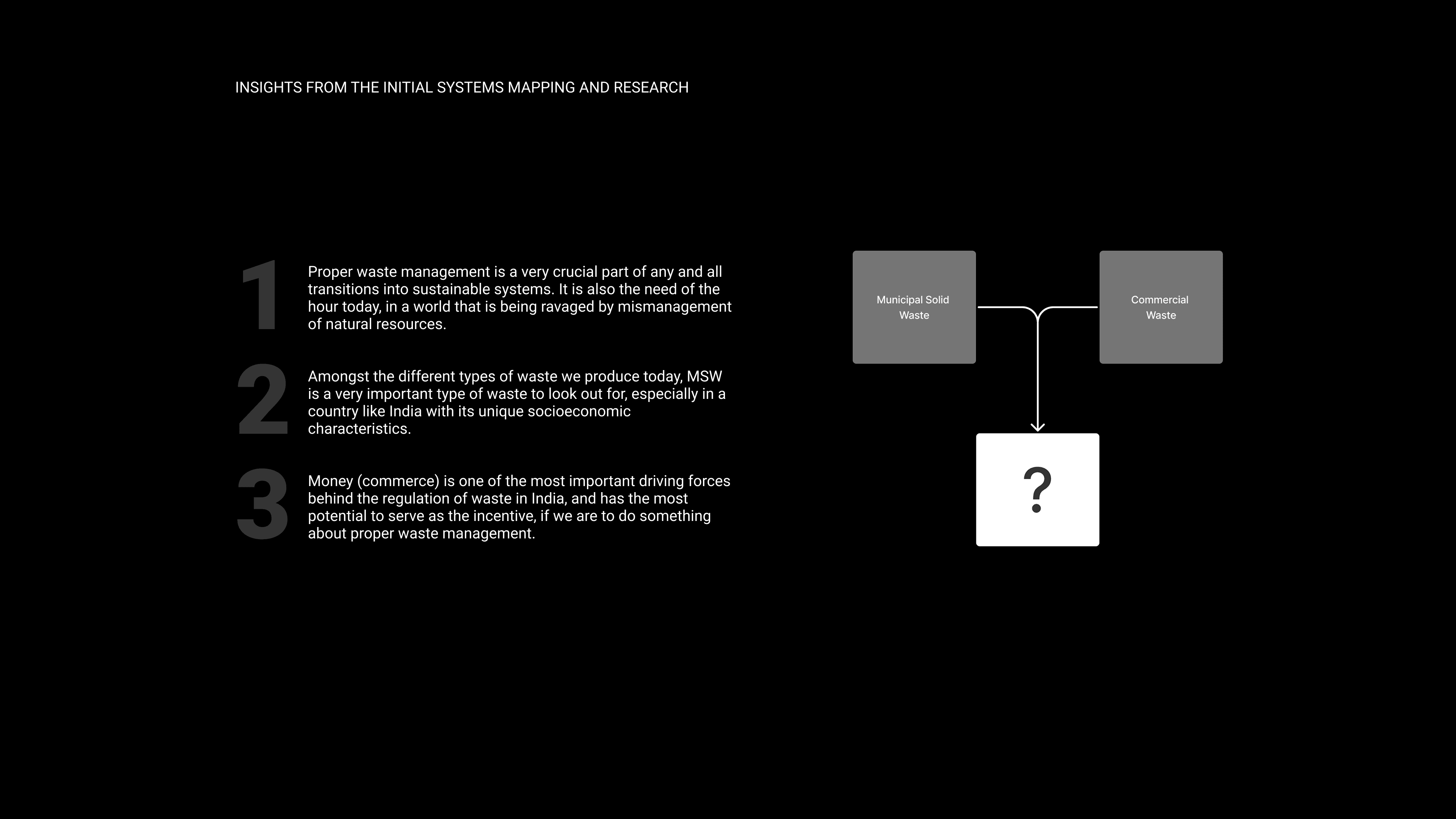
Finally, after all of the above research, we came up with our unique solution.
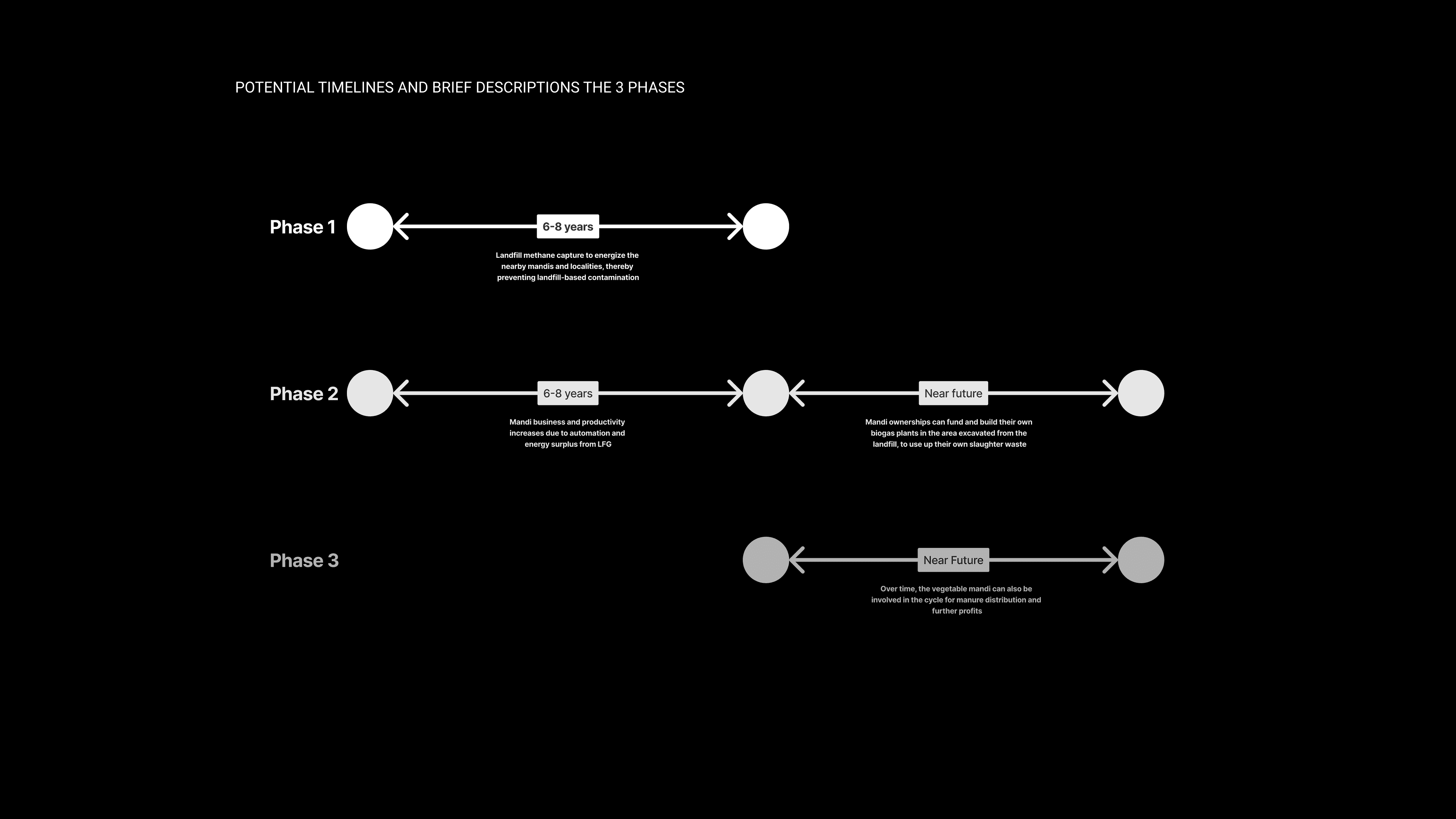
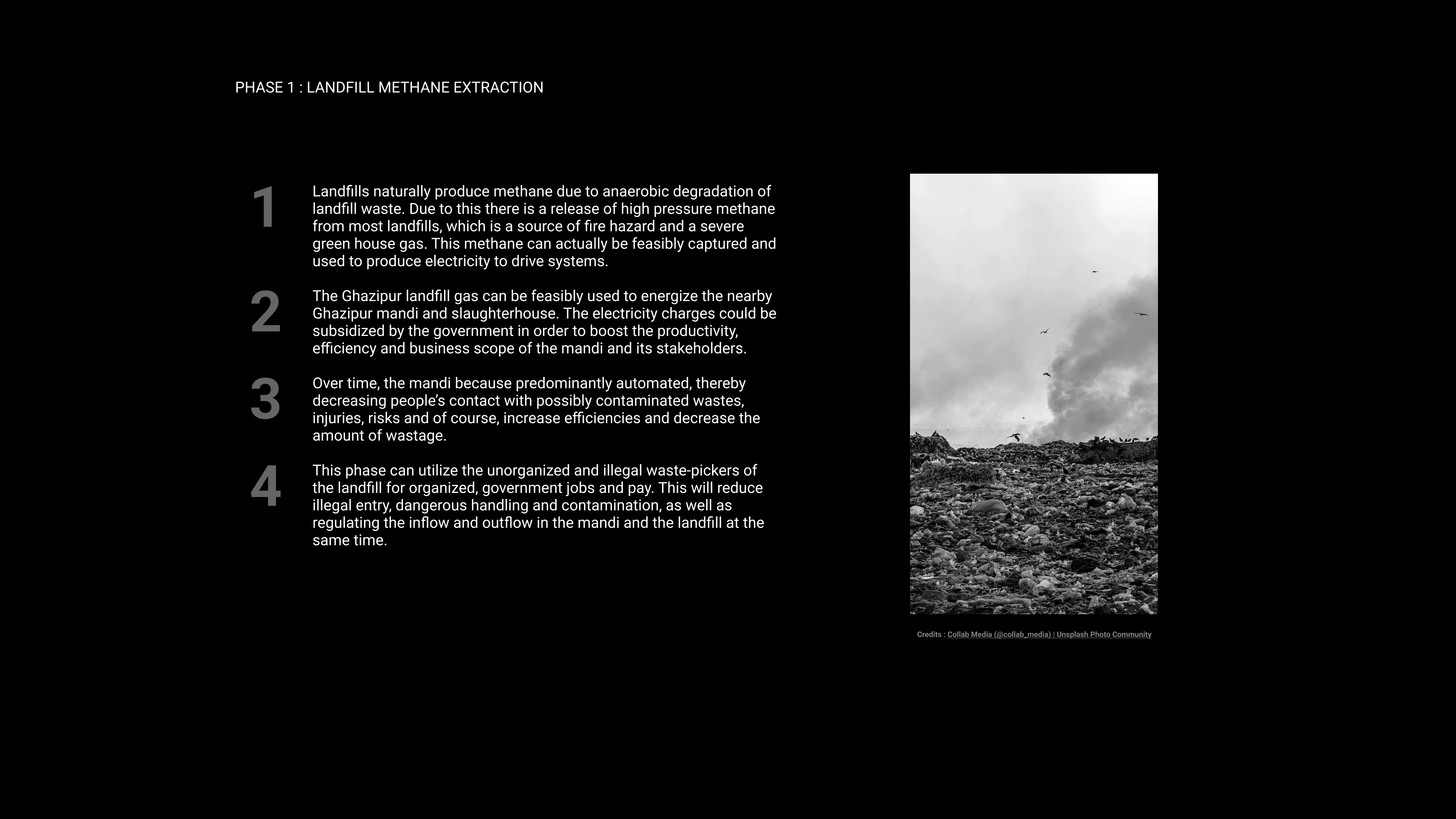
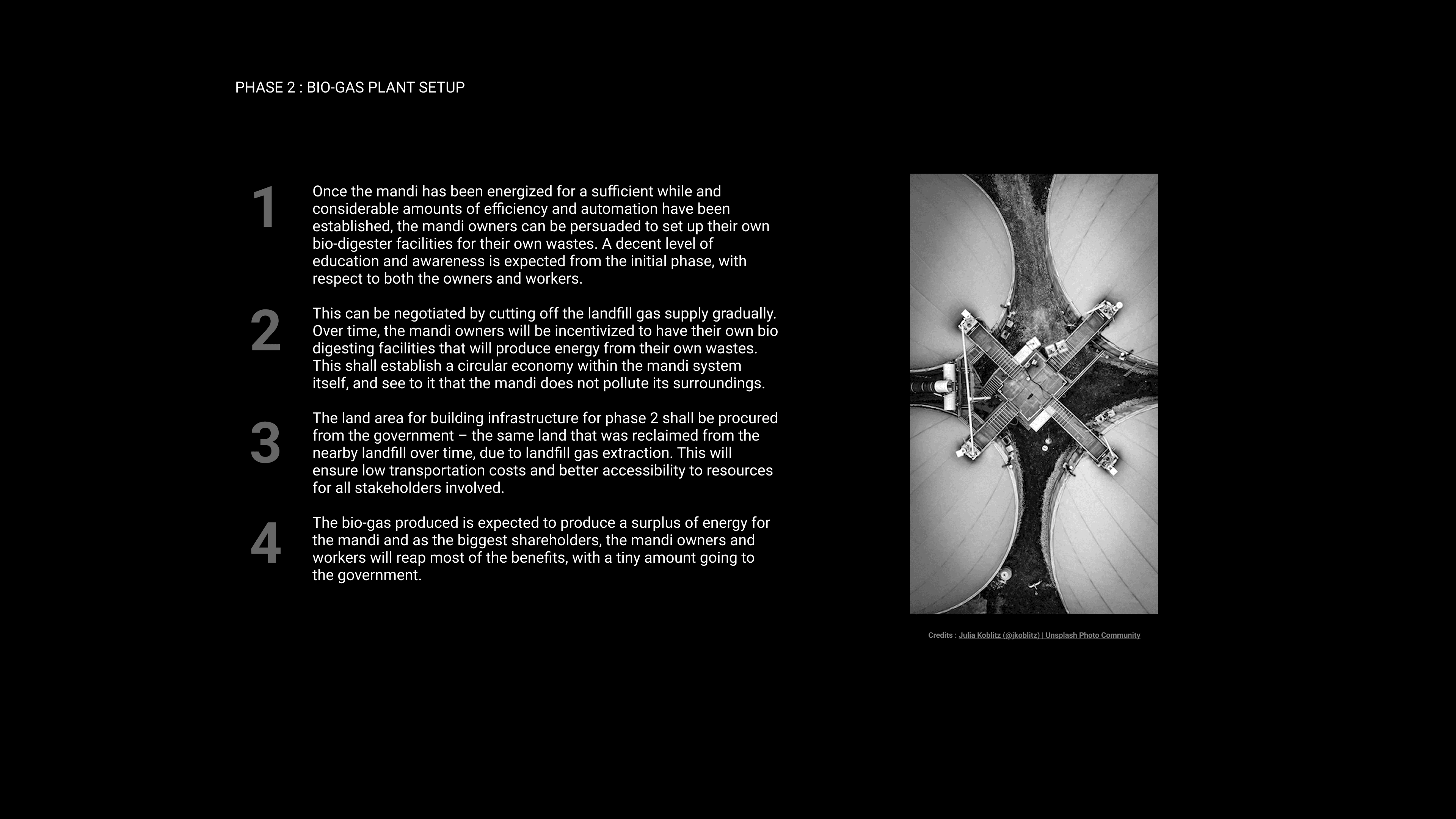
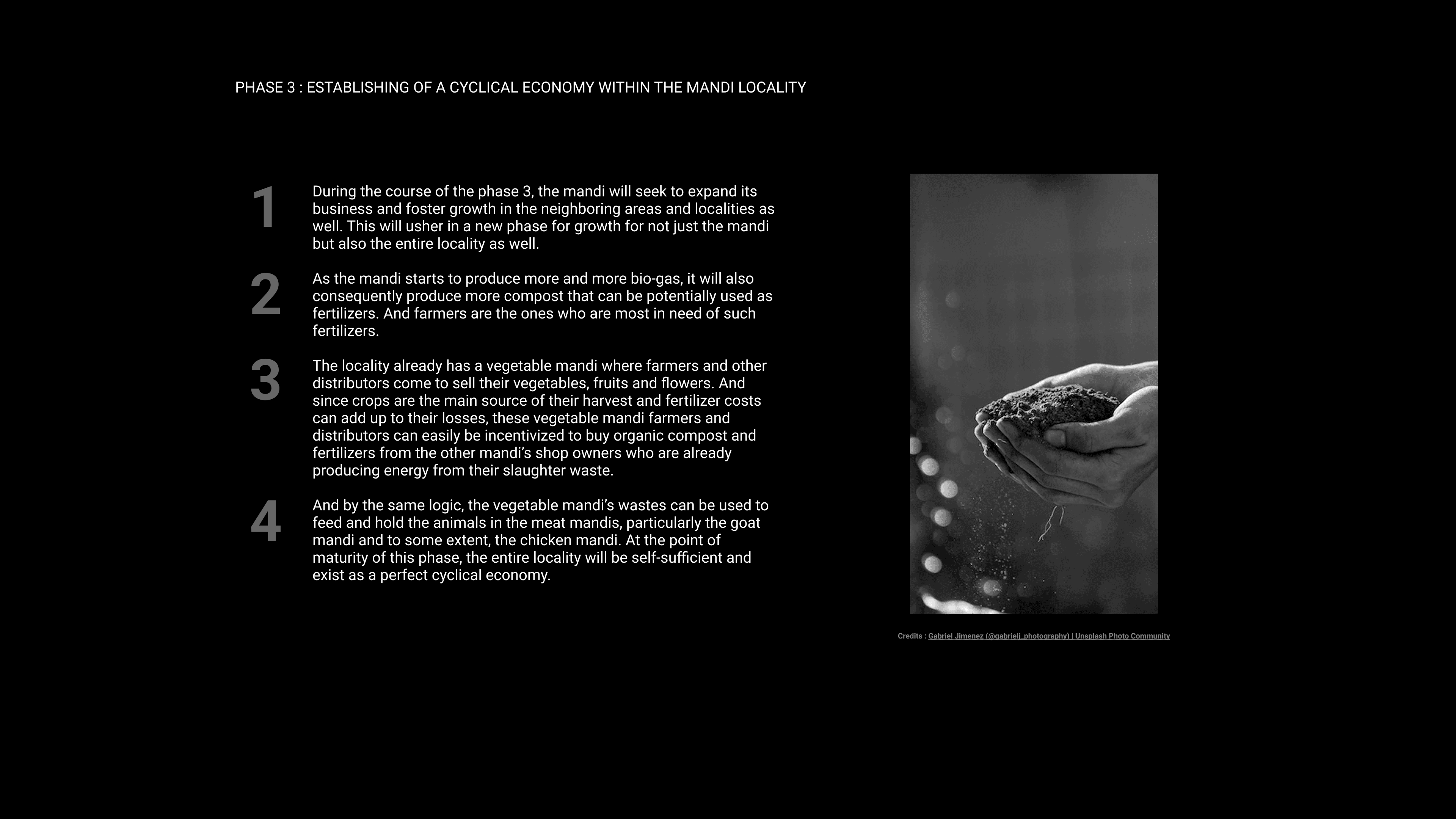
The following is our three-phase, systems-solution: