Color Crush
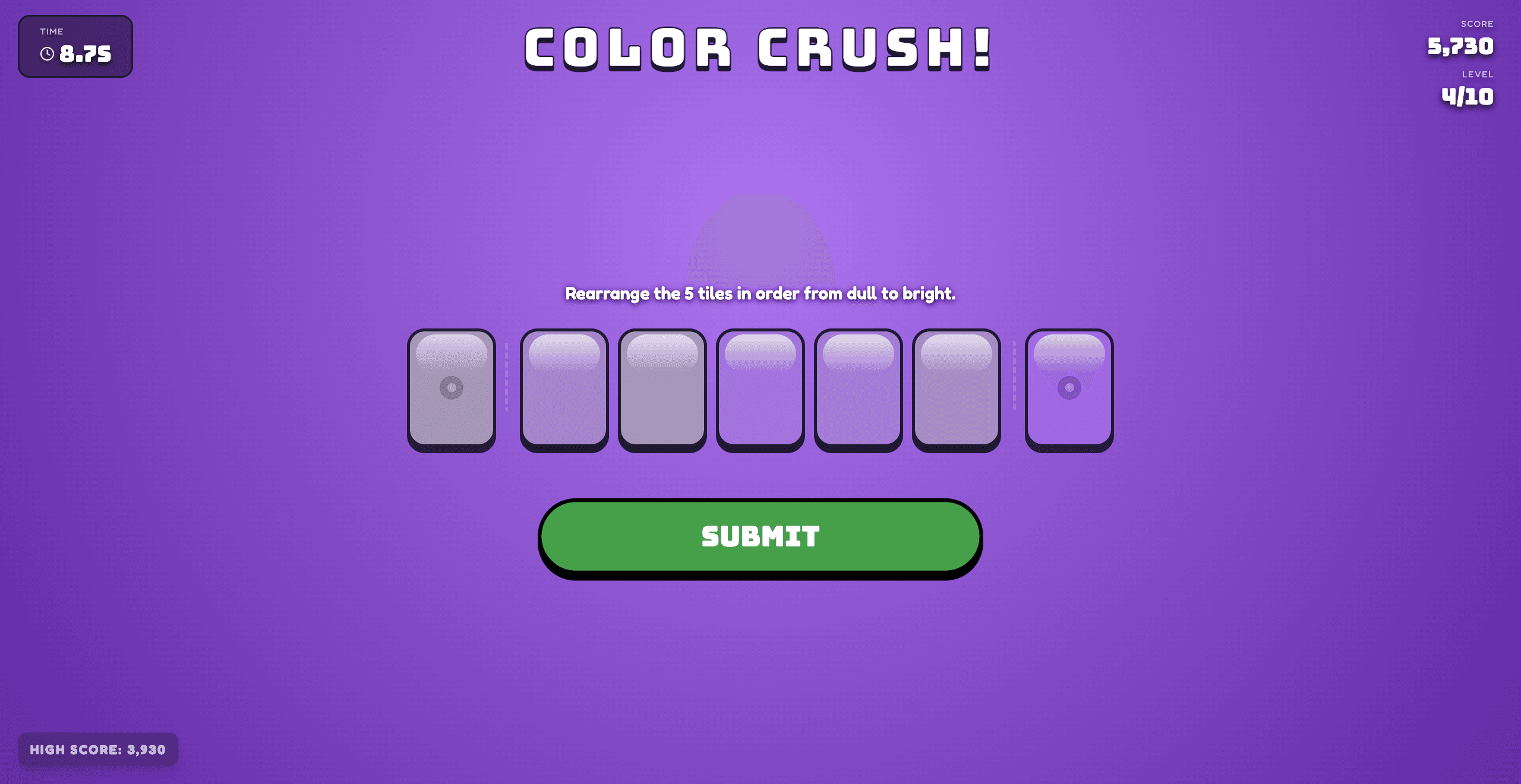
Color Crush is an interactive, gamified test of visual perception. Unlike typical puzzle games, it challenges users to rank randomized tiles based on subtle shifts in saturation and Lightness. It’s a tool for designers and color enthusiasts to sharpen their "eye" for color variance in a high-pressure, fun environment.

Tools
Gemini (Logic & Architecture)
Antigravity (Engine)
Netlify (Deployment)
Role
Product Architect &
Lead Prompt Engineer
The "Why":
Designing for the Unseen
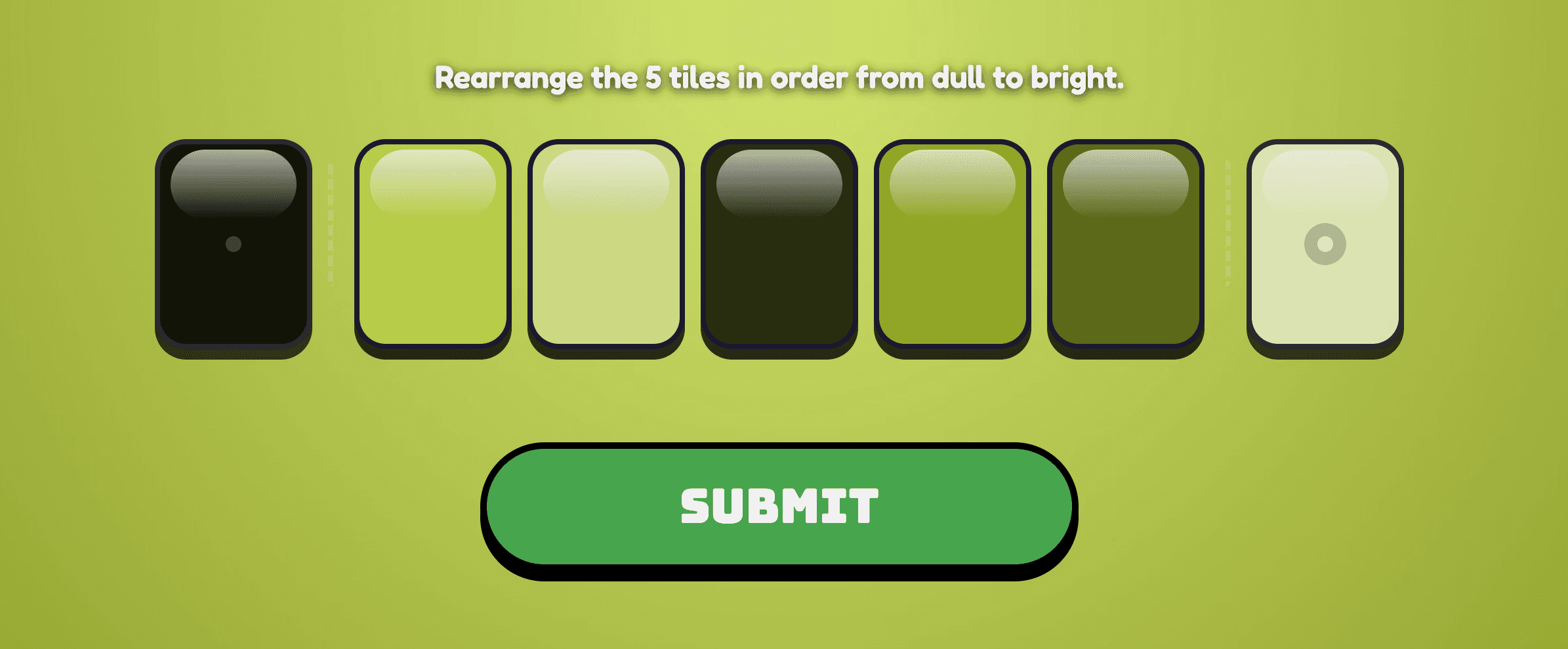
The core intention behind Color Crush is to bridge the gap between "perfect" vision and the reality of Color Vision Deficiency (CVD). Many designers operate under the assumption that everyone sees their palettes the same way. This game is designed to challenge that bias by putting the player’s visual differentiation skills to the test, highlighting how difficult and sometimes impossible it is to distinguish between certain saturations and intensities.
Origin of the Idea:
A Reality Check
The project was born from a realization: roughly 1 in 12 men and 1 in 200 women have some form of color blindness. I wanted to create a tool that wasn't a boring lecture on accessibility, but a high-energy game that forces a "moment of truth." If a designer struggles to rank these colors, it serves as a wake-up call to start using patterns, high contrast, and labels in their professional work.
Aesthetics & Inclusive
Visual Language
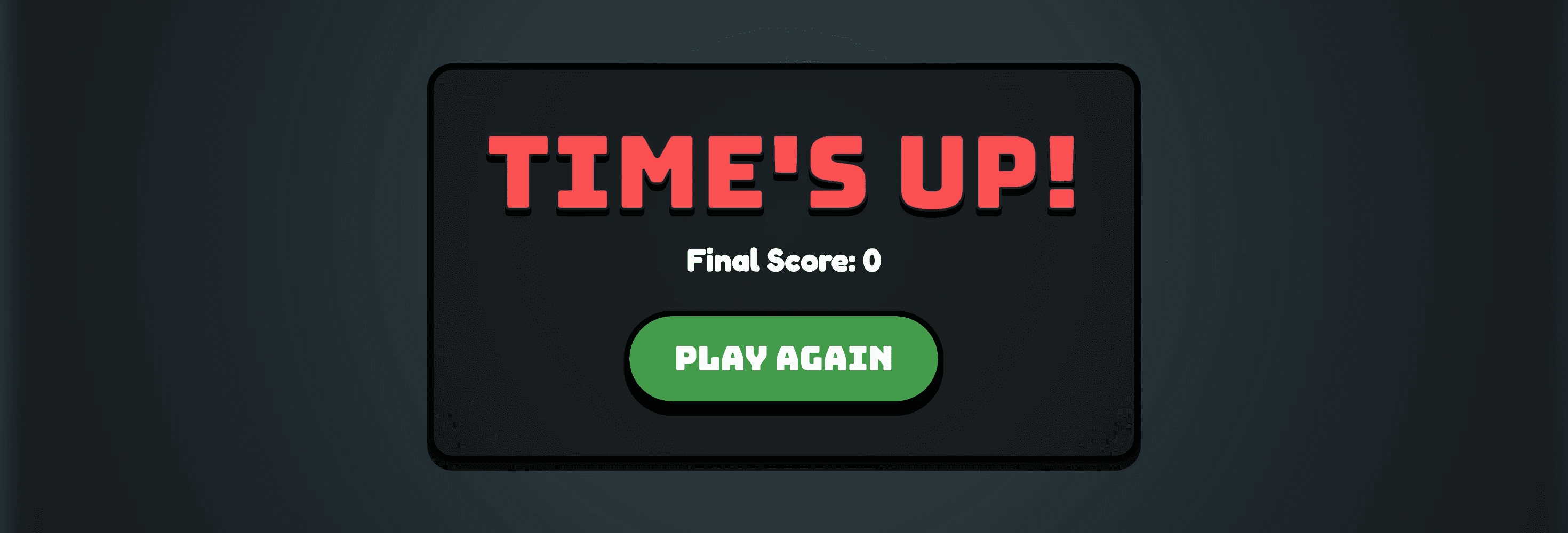
While the UI is vibrant and "Kid-Core," the design choices were intentional:
Tactile Feedback: Large cards make the interaction feel physical, emphasizing the effort of "sorting."
The "Reveal" Moment: After the failed attempt card reveals the exact saturation and Lightness data. This is the Empathy Hook it shows the player exactly what they missed, mirroring the daily experience of someone with CVD.
Adaptive Backgrounds: The background shifts to match the active card, testing whether the player can still distinguish the tile when the surrounding "environment" changes, a common struggle in low-contrast design.
AI Powered Workflow
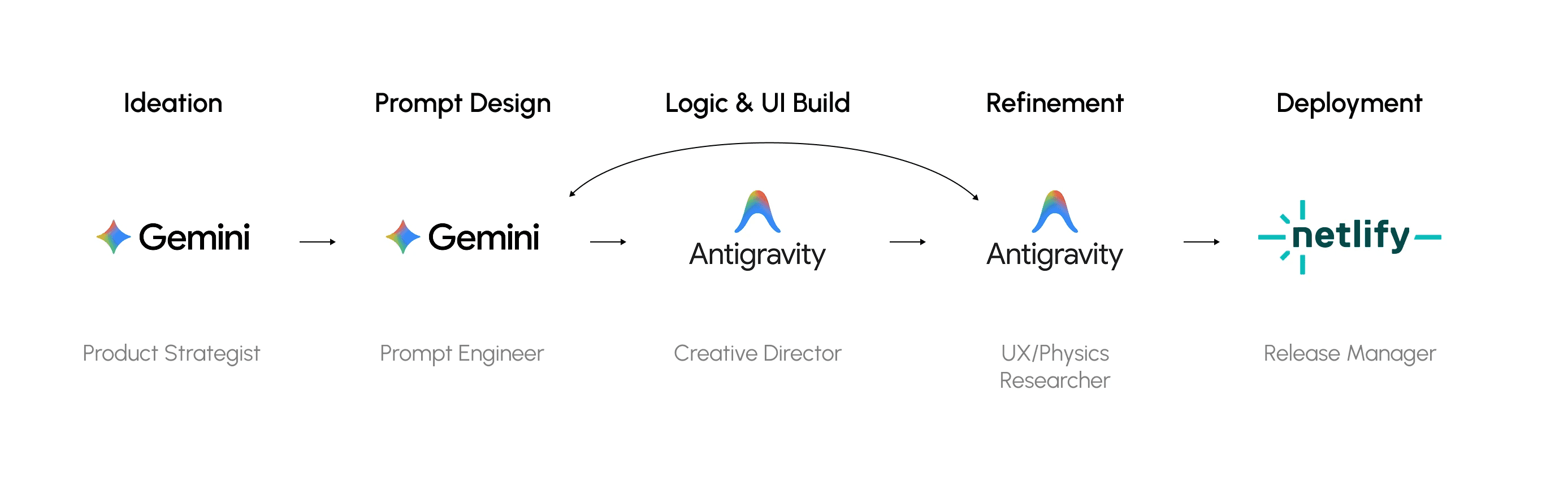
Ideation & Strategy: I collaborated with Gemini to pivot the project from a simple color-sorting tool into an empathy-driven game focused on color blindness awareness.
Prompt Engineering: I synthesized high-context "Master Prompts" to translate my design requirements and technical HSL logic into instructions the AI could execute.
Core Prototyping: I utilized the Antigravity engine to generate the initial game architecture, focusing on physics-based interactions and real-time color analysis.
Iterative Refinement: I steered multiple feedback loops to refine the "Kid-Core" aesthetic, optimize tile-swapping fluidity, and polish the educational feedback screens.
Deployment: I managed the final integration and end-to-end launch on Netlify to transform the AI-generated code into a live, production-ready web application.
The "Invisible"
Advocacy Strategy
Although the project was built to raise awareness about Color Vision Deficiency (CVD), I deliberately avoided explicit references to disability or accessibility in the interface. By framing it as a universal, high-energy challenge, awareness emerges naturally through gameplay. As players struggle to distinguish subtle variations, they experience the friction people with CVD face, creating a sense of “stealth empathy” without making the game feel clinical.